
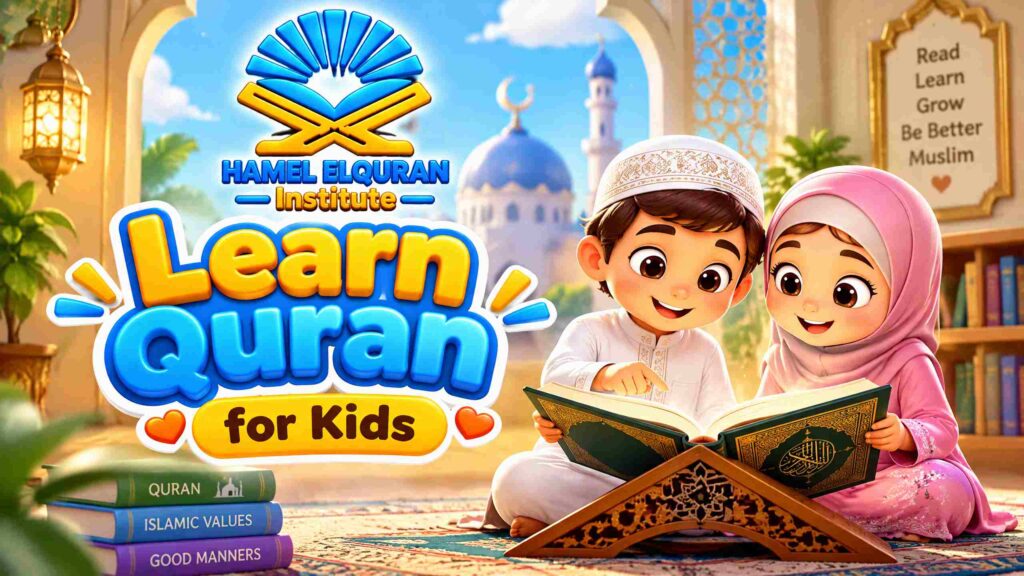
Learn Quran for Kids begins with understanding each child’s age, reading ability, and previous experience with Quranic study. Parents need a suitable approach that matches their child’s level, whether they are beginners learning Arabic letters or older children developing reading, Tajweed, and memorization skills.
Choosing the right learning method also means considering lesson structure, teacher experience, and time available for regular practice. Online learning can provide individual attention, but parents should understand how lessons work and how progress is monitored.
This guide explains how children develop Quran reading skills, what parents should consider when choosing an online teacher, and how to support learning at home. It also explores how Hamel El-Quran Academy supports children’s Quran education through one-to-one lessons and flexible scheduling.
Why Start Quran Learning During Childhood?

Children can become familiar with Quranic Arabic gradually when lessons match their attention spans and developmental stages. Early learning is not about rushing through pages. It is about building a positive relationship with recitation while developing the skills needed for accurate reading.
A suitable learning approach can help children:
- Recognize Arabic letters and their sounds.
- Connect letters and vowel marks to read simple words.
- Develop listening skills and improve pronunciation.
- Memorize short surahs through regular revision.
- Understand selected verses through age-appropriate explanations.
Parents should remember that children develop at different rates. One child may enjoy repeating Arabic sounds, while another needs more time before reading independently. Progress should be measured against the child’s starting point rather than another student’s achievements.
How Children Learn the Quran at Different Ages
A plan to learn the Quran for kids should reflect what a child can understand and practice at each stage. Age provides a useful starting point, but previous attention span and personal interests also influence readiness.
Ages 3–6: Build Familiarity and Enjoyment
At this stage, keep activities short and positive. Children can listen to brief recitations, repeat familiar phrases, and become comfortable hearing Quranic Arabic.
Useful activities include:
- Listening to short surahs together.
- Repeating a few words or verses at a comfortable pace.
- Recognizing Arabic letters through simple visual activities.
- Sharing age-appropriate stories connected to the Quran.
Avoid expecting preschoolers to sit through long lessons or master technical Tajweed terminology. If a child loses focus, pause and return to the activity later.
Ages 7–12: Develop Independent Reading Skills
Many children in this age group are ready for a more organized reading pathway. Beginners can start with Noorani Qaida, learning letter shapes, vowel marks, and how Arabic letters connect.
Children who already recognize Arabic words can move towards reading directly from the Mushaf. Regular teacher feedback helps identify pronunciation errors, incorrect vowel sounds, and difficulties with joining letters.
At this stage, Learn Quran for Kids programs should balance reading practice, introductory Tajweed, and short surah memorization without overwhelming the student.
Ages 13 and Older: Improve Recitation and Understanding
Older children and teenagers may be ready to connect recitation with meaning. Their learning can include fluent Mushaf reading, practical Tajweed, selected memorization, and age-appropriate explanations of verses.
Give teenagers opportunities to ask questions. Discussing the meaning and context of what they recite can make lessons more engaging than memorization without understanding.
What Should a Child Learn First?
Parents should understand the order of essential Quran learning skills before choosing a program. A structured approach prevents children from being pushed into material they are not ready to use.
1. Arabic Letters and Basic Reading
A beginner needs to recognize letters in their different positions and understand short vowels, sukoon, and basic combinations.
A Qaida-based approach provides a foundation for reading. The objective is to help children recognize and pronounce Arabic words rather than simply repeat letter names from memory.
2. Reading Short Quranic Passages
Once children can combine letters, practice can move towards short words and selected Quranic passages.
The teacher should listen carefully and correct pronunciation gently. This makes it easier to identify mistakes before they become established reading habits.
3. Basic Tajweed in Practice
Children do not need to memorize every Tajweed definition at the beginning. They should first hear and practise correct articulation, clear pronunciation, and appropriate elongation.
Rules can be introduced gradually through the verses being studied. This makes technical concepts easier to understand and apply.
4. Short Surah Memorisation and Revision
Memorising short surahs supports familiarity with Quranic language and helps children prepare for prayer.
New verses should always be paired with revision. Without regular repetition, children may remember a passage temporarily but struggle to recall it later.
Can Children Learn the Quran Online Effectively?
Yes. Online learning can work well when lessons are interactive, the teacher can hear the child clearly, and the program matches the learner’s level.
For families comparing the Quran online for kids, the key consideration should be the quality of interaction rather than the screen itself. Parents researching the Quran for kids online should check how much time children spend reading aloud and receiving individual feedback.
Effective online instruction should include:
- Live listening and recitation rather than recorded videos alone.
- Opportunities for children to read and ask questions.
- Corrections explained in language suitable for their age.
- Realistic lesson targets.
- Clear guidance about home revision.
Online lessons are not automatically suitable for every child. Younger learners may need a parent nearby to maintain concentration, while older students may manage sessions more independently.
How to Choose the Right Online Quran Teacher

A teacher’s ability to work with children matters as much as their own recitation skills. Parents should look for patient explanations, organized lessons, and experience teaching different learning levels.
When comparing options for Quran teaching for kids, consider whether the instructor can explain pronunciation mistakes without discouraging the child.
Ask these questions before enrolling:
- How does the teacher assess a complete beginner?
- How are pronunciation mistakes identified and corrected?
- Does the teacher adapt lessons to the child’s age and attention span?
- How do parents receive updates about learning progress?
- What should the child practice between lessons?
Review the instructor’s qualifications and teaching experience. Parents can also explore this guide to the best Quran teachers to understand the qualities worth considering when selecting an instructor.
Families interested in learning about instructor backgrounds can also read about an Egyptian Quran teacher online and the teaching considerations involved in choosing one.
How Hamel El-Quran Academy Supports Children’s Learning
For parents who want their children to learn Quran for kids through individual instruction, choosing a suitable teaching arrangement is an important first step. Lessons should match the child’s age, reading ability, and learning pace.
Hamel El-Quran Academy offers online Quran lessons with qualified teachers and one-to-one instruction. This arrangement allows teachers to listen carefully to each child’s recitation, correct mistakes, and focus on skills that need improvement. Beginners can start with Arabic letters and basic reading, while more confident learners can practice recitation and Tajweed.
The academy also provides flexible scheduling and student progress tracking, helping parents follow their children’s development and organise lessons around family commitments.
Parents can explore the factors involved in choosing the best online Quran academy, including teacher suitability and individual attention.
Contact Hamel El-Quran Academy to discuss your child’s current level and identify a suitable learning approach.
How to Support Your Child at Home
Children need encouragement at home as well as clear teaching during lessons. Parents do not need to speak Arabic or have advanced Quran knowledge to support their children’s learning.
A few practical habits can make a difference:
- Choose a consistent time: Connect revision with a quiet part of the daily routine.
- Keep practice manageable: A few focused minutes can be more productive than a long session that causes frustration.
- Listen patiently: Allow the child to finish a short passage before discussing corrections.
- Celebrate specific achievements: Recognize improved pronunciation, confidence, and regular practice.
- Communicate with the teacher: Ask which letters, verses, or rules need attention that week.
If your child becomes tired or distracted, reduce the task rather than turning practice into a conflict. Consistency matters, but the routine must remain realistic for the family.
Parents who want to strengthen their own memorization alongside their children may also find this guide to the Hifz Quran for adults useful.
Building a Sustainable Quran Memorization Routine

Memorisation can be introduced alongside reading when the child is ready, but it should not replace learning to read accurately.
Start with a small portion that the child can repeat confidently. The teacher can help decide how much new material is appropriate.
A simple routine includes three parts:
- New learning: Listen to the passage, repeat it with guidance, and recite it independently.
- Recent revision: Review the portion learned during the previous lesson.
- Earlier revision: Return to older surahs regularly to maintain recall.
Avoid setting targets based only on how quickly a child memorises. Retention, accurate recitation, and willingness to continue are better measures of sustainable progress.
Families comparing different programmes may also explore the best online tajweed course to understand how structured pronunciation instruction fits into Quran learning.
How to Measure Your Child’s Quran Learning Progress
Progress does not always mean completing more pages. Parents should look for improvements in the specific skills their children are developing.
Signs of progress include:
- Recognising more Arabic letters without assistance.
- Joining letters and reading familiar words more confidently.
- Pronouncing previously difficult sounds more accurately.
- Reading short passages with fewer corrections.
- Remembering memorised surahs after regular revision.
- Understanding simple explanations of selected verses.
When children learn Quran for Kids through a structured programme, parents should ask the teacher to identify current strengths and the next learning priorities.
Specific feedback is more useful than a general statement that the child is doing well. It helps families understand what has improved and what needs further attention.
Common Mistakes Parents Should Avoid
Parents can make Quran learning more enjoyable by setting realistic expectations and responding calmly when a child needs additional practice.
Avoid these common mistakes:
- Comparing children: Every learner has a different starting point and learning pace.
- Expecting long sessions: Younger students often need shorter, focused activities.
- Correcting every mistake simultaneously: Follow the teacher’s priorities to avoid overwhelming the child.
- Starting intensive memorisation too early: Build reading accuracy before setting demanding Hifz targets.
- Changing methods too frequently: Give a suitable approach enough time while reviewing its effectiveness.
- Ignoring the child’s feedback: Ask what feels difficult and discuss possible adjustments with the teacher.
The aim is to develop confidence and reliable learning habits rather than make children feel pressured to finish a certain amount.
Is Hamel El-Quran Academy Suitable for Your Child?
Choosing a programme starts with identifying the support your child actually needs. Hamel El-Quran Academy may be suitable for families looking for one-to-one online instruction, qualified teachers, progress tracking, and flexible lesson scheduling.
Before making a decision, explain whether your child is a complete beginner, can already read Arabic, or needs help with recitation and revision. Ask how the teacher would approach that level and what parents should expect between lessons.
For parents exploring ways to learn Quran for Kids, the most suitable choice is one that respects the child’s current ability and the family’s routine.
Hamel El-Quran Academy provides an opportunity to discuss these requirements and understand the available teaching arrangements before deciding whether to proceed.
Help Your Child Learn the Quran with Confidence
Give your child a supportive start with structured Quran learning that matches their age and reading ability. Hamel El-Quran Academy offers one-to-one online lessons with qualified teachers, allowing children to practise recitation and develop their reading skills with individual attention.
Whether your child is a beginner learning Arabic letters or needs support with Quranic reading and Tajweed, choosing a suitable learning approach is an important first step.
Contact Hamel El-Quran Academy to discuss your child’s current level, understand the available teaching arrangements, and explore a suitable schedule that fits your family’s routine.

How Can Parents Adapt Quran Learning to Their Child’s Needs?
Children have different learning abilities, interests, and paces when studying the Quran. Parents can make learning more comfortable by adjusting activities to their child’s individual needs.
- Avoid comparing their child with other children.
- Allow extra time for lessons that seem difficult.
- Give children opportunities to ask questions.
- Provide additional Arabic letter recognition practice when needed.
- Offer more recitation practice to improve pronunciation.
- Avoid putting pressure on children when they make mistakes.
- Choose activities that match the child’s learning pace and abilities.
- Keep Quran learning a positive part of the daily routine.
A flexible approach helps children develop their Quran skills without feeling overwhelmed. Patience and encouragement can make learning more enjoyable and sustainable.
Frequently Asked Questions About Learning Quran for Kids
Find helpful answers to common questions parents ask about how to learn Quran for kids, choose suitable online lessons, and support their children’s Quran learning progress.
How many days a week should a child study the Quran?
The appropriate frequency depends on age, attention span, and existing reading skills. Ask the teacher to recommend a schedule that leaves enough time for revision between lessons.
Should parents sit with children during online lessons?
Younger children may benefit from having a parent nearby, especially when learning how to use the online classroom. Older students may need less direct supervision as they become more independent.
What equipment does a child need for online Quran study?
Families generally need a reliable internet connection, a suitable device, working audio, and a quiet learning space. Confirm the provider’s technical requirements before lessons begin.
What if my child loses interest in learning?
Find out what makes the lessons difficult. The pace, lesson length, teaching approach, or learning target may need adjustment. Discuss these concerns with the teacher before changing programmes.
Conclusion
Helping children learn the Quran requires patience, regular practice, and an approach that suits their age and reading ability. Every child develops at a different pace, so parents should focus on steady improvement rather than expecting quick results. Starting with Arabic letters, pronunciation, and short surahs creates a strong foundation for future learning.
Choosing the right teacher also makes a difference. Children benefit from clear explanations, encouragement, and lessons that match their individual needs. Parents can support this progress by setting a simple daily routine, listening to recitation, and celebrating small achievements.
Hamel El-Quran Academy offers qualified teachers, one-to-one lessons, flexible scheduling, and student progress tracking. These arrangements help parents follow their children’s development and understand which skills need more practice. Contact the academy to discuss your child’s current level and explore a suitable learning plan.