

Best Quran teachers help students develop accurate Quran recitation, understand Tajweed rules, and build consistent learning habits through appropriate instruction. Hamel El-Quran Academy supports learners in developing their Quranic skills through structured learning suited to their individual needs.
However, choosing a suitable instructor requires more than comparing profiles or looking for impressive qualifications. Students should consider Quranic knowledge, teaching experience, communication skills, and the ability to address individual learning needs.
Whether you are choosing lessons for your child or improving your own recitation, understanding these factors can help you make an informed decision. This guide explains how to evaluate teaching qualifications, verify Ijazah credentials, assess teaching methods, and prepare for the first lesson.
What Makes a Quran Teacher Qualified?
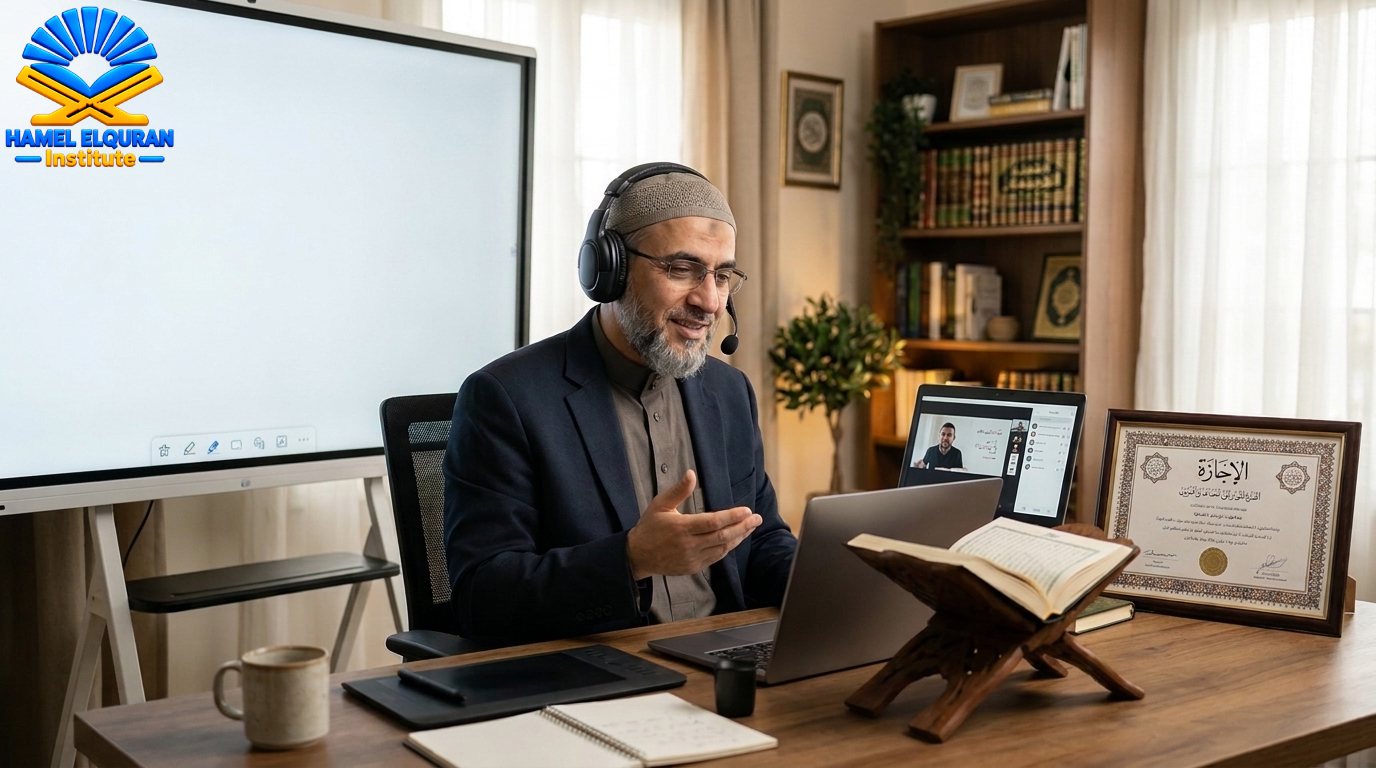
The best quran teachers combine sound Quranic knowledge with the ability to explain, demonstrate, and correct recitation accurately. Their qualifications matter, but so does their approach to helping students understand and apply what they learn.
When evaluating an instructor, consider the following qualities:
- Accurate Quran recitation: The teacher should demonstrate correct pronunciation and explain relevant Tajweed rules.
- Effective teaching methods: Lessons should follow a clear sequence appropriate to the student’s current ability.
- Patience and constructive feedback: Beginners need corrections that identify mistakes without making them feel discouraged.
- Adaptability: Children, adult beginners, and advanced learners require different teaching approaches.
- Clear communication: The instructor should explain unfamiliar Arabic sounds and Quranic terminology in a language the student understands.
- Consistent assessment: Regular feedback helps learners recognize their strengths and identify areas requiring additional practice.
A qualified instructor should also distinguish between reading accuracy, memorization ability, and understanding of Tajweed. These skills are related, but progress in one does not automatically establish mastery of the others.
How Are Quran Teachers Vetted Before Enrollment?
Teacher vetting helps students determine whether an instructor’s stated qualifications and experience match their educational needs. A reliable selection process should involve more than accepting a profile description at face value. Before enrolling, look for evidence of the following:
1. Verification of Qualifications
Ask about the instructor’s Quranic studies, relevant certificates, and any Ijazah they hold. When appropriate, request information about the issuing scholar or institution and the specific recitation covered.
Qualifications should match the subject being taught. Someone experienced in teaching beginners may be an excellent choice for foundational reading, while advanced Qira’at instruction requires more specialized expertise.
Where verification is possible, check the credential’s details and ask the instructor to explain what it authorizes them to teach. Do not assume that every certificate represents the same level of study or authorization.
2. Assessment of Teaching Ability
Strong recitation skills do not automatically establish that someone can teach effectively. An instructor should be able to explain a pronunciation error, demonstrate the correct sound, and help the student practise it.
A structured evaluation may include a teaching demonstration, a sample explanation, or an introductory lesson. Notice whether the instructor identifies mistakes accurately and provides practical guidance for correcting them.
Pay attention to how the teacher responds when a student struggles. Clear explanations, appropriate repetition, and specific corrections are more useful than simply pointing out that something is incorrect.
3. Review of Experience and Communication
Ask whether the instructor has worked with learners of a similar age, language background, and ability level. Teaching young children often requires different techniques from those used with adults learning Arabic pronunciation for the first time.
The best quran teachers should also explain how lessons are organized, how practice assignments are given, and how progress is communicated between sessions.
Before making a commitment, clarify the lesson schedule, expected practice time, and method of receiving feedback. These details help you understand what the learning arrangement involves.
Ijazah and Qualifications: What Should You Check?

An Ijazah is an authorization granted by a qualified teacher in a particular field of Quranic learning or transmission. Its meaning depends on the authorization’s scope and the tradition or recitation involved.
For students comparing instructors, understanding this distinction helps prevent confusion between memorization, teaching experience, academic qualifications, and formal authorization.
What Does an Ijazah Demonstrate?
An Ijazah in Quran recitation generally relates to demonstrated proficiency and authorization within a specified transmission or recitation pathway. Its precise scope should be understood from the credential rather than inferred from the word alone.
When reviewing an instructor’s Ijazah, ask:
- Which recitation or narration does it cover?
- Who granted the authorization?
- Does it concern recitation, memorization, or another area of Quranic study?
- Is it relevant to the course you intend to take?
- Can the instructor explain the scope of the authorization clearly?
These questions help you assess whether the credential matches your learning goals.
Are Certificates and Teaching Experience Equally Important?
They serve different purposes. Academic qualifications may demonstrate formal study, while an Ijazah relates to a particular area of Quranic authorization. Teaching experience provides evidence of classroom practice, but it does not replace verification of specialized credentials.
A beginner learning Noorani Qaida may prioritize foundational teaching skills and accurate pronunciation. Someone preparing for advanced recitation may need an instructor with relevant Ijazah credentials and experience in the specific narration being studied.
The appropriate qualification therefore depends on the subject, the student’s current ability, and the intended learning outcome.
How to Match a Teacher to Your Learning Goals
The best quran teachers are not necessarily the same for every student. The right choice depends on what you want to learn, your current ability, and the amount of guidance you need. If you are comparing learning options, reviewing a best online quran academy can help you understand the available courses and identify an approach that suits your goals.
For Children
Young learners often benefit from short activities, repetition, clear instructions, and patient correction. Parents should ask how the instructor maintains attention, introduces new material, and communicates progress.
A suitable teacher should establish manageable learning goals instead of expecting a child to memorize large amounts before developing reliable reading skills.
Parents should also clarify how the instructor handles mistakes and whether lessons include regular revision. Consistent communication helps families understand what their children are learning and where additional practice may be needed.
For Adult Beginners
Adults may need help recognizing Arabic letters, joining letters correctly, distinguishing similar sounds, and applying basic Tajweed rules. Look for an instructor who can explain these steps without assuming prior knowledge.
If you already read Arabic, your lessons may focus instead on correcting recurring pronunciation mistakes, improving fluency, and applying recitation rules more accurately. Learners who want structured instruction in recitation rules can also compare the best online tajweed course to determine whether its curriculum matches their current ability.
The teaching approach should reflect your existing skills rather than follow the same sequence for every learner.
For Tajweed and Hifz
Students studying Tajweed need explanations and repeated practice of rules involving articulation points, letter characteristics, and relevant recitation rulings. A structured online quran recitation course may suit learners who want to improve pronunciation and apply these rules through guided practice.
Hifz students require a consistent revision strategy, realistic memorization targets, and regular recitation checks. Ask how the instructor balances new memorization with reviewing previously learned passages.
The right Quran teacher is one whose expertise and teaching approach match the student’s specific learning goals rather than a generic ranking. Depending on your needs, quran recitation classes online may provide a suitable format for practising with an instructor and receiving feedback on recurring mistakes.
Start Learning with Hamel El-Quran Academy
Choosing among the best Quran teachers becomes easier when you understand your learning goals and find an instructor who matches your needs.
Hamel El-Quran Academy can help you take the next step toward improving Quran recitation, learning Tajweed rules, and building a consistent study routine. Explore the available learning options and contact the academy to discuss your goals and find a suitable learning path.

What Happens During the First Quran Lesson?
Your first lesson should establish a starting point and clarify what you need to work on. It should not require you to demonstrate skills you have not yet learned.
Although the format varies, a useful introductory session may include the following stages.
Step 1: Discuss Your Goals
Explain whether you want to learn Arabic letters, improve recitation, study Tajweed, memorize selected surahs, or work toward a more advanced objective.
Parents should also explain their child’s previous learning experience and any difficulties they have noticed. This information helps the instructor choose an appropriate starting point.
Step 2: Complete an Initial Reading Assessment
The teacher may ask you to read letters, short words, or Quranic passages according to your current level. Beginners may start with letter recognition rather than reading a complete passage.
This assessment allows the instructor to identify pronunciation difficulties, reading gaps, and areas that need further practice. For additional practice outside scheduled lessons, online quran recitation resources may help reinforce familiar sounds and passages, provided they complement rather than replace personalized correction when needed.
The purpose is to understand your current ability, not to judge you for making mistakes. An appropriate assessment should reflect your experience and learning objectives.
Step 3: Practise With Immediate Feedback
The teacher may demonstrate a sound or recitation rule, ask you to repeat it, and explain how to improve. Pay attention to whether the correction is specific enough for you to apply independently.
For example, being told that a letter is incorrect is less useful than receiving a clear demonstration of its articulation point and an opportunity to practise it.
You should also have enough time to ask questions and repeat difficult sounds. Constructive feedback helps you understand both the mistake and the steps needed to correct it.
Step 4: Agree on a Learning Plan
Before finishing, discuss lesson frequency, practice between sessions, and the skills you will work on first. Ask how progress will be reviewed and when learning goals may be adjusted.
A qualified Quran instructor should explain the next steps clearly without promising unrealistic results after a single lesson.
Before leaving the session, make sure you understand what to practise, which materials to use, and how the next lesson will build on your current progress.
How to Evaluate Teaching Methods and Progress
An effective lesson should produce a clearer understanding of what you are learning and what you need to practise next.
When comparing available Quran-learning options, consider whether lessons include:
- A clear objective for each session.
- Guided recitation and opportunities to practise independently.
- Specific corrections rather than general praise or criticism.
- Revision of previously learned material.
- Appropriate homework or practice recommendations.
- Feedback that connects current performance to learning goals.
Progress may appear in different ways. A beginner might recognize letters more reliably, while an intermediate learner may reduce recurring pronunciation errors. A memorization student may become more consistent when recalling previously learned passages.
The best quran teachers use these observable changes to guide instruction. They should explain when a skill needs more practice instead of moving forward simply because a scheduled lesson has ended.
Progress should be assessed against realistic learning goals rather than a fixed timeline that ignores individual differences. If improvement is difficult to identify, ask the instructor which skills are developing and what needs further attention.
Warning Signs to Consider Before Enrolling
A polished profile does not guarantee a suitable learning experience. Watch for signs that the teaching arrangement may not meet your needs.
- Unclear credentials: The instructor cannot explain what a claimed qualification covers.
- No meaningful assessment: Lessons begin without considering your existing skills or goals.
- Vague corrections: The teacher identifies mistakes but cannot explain how to improve them.
- Unrealistic promises: Specific mastery levels or guaranteed outcomes are promised without considering your starting point.
- Poor communication: You cannot obtain clear information about lesson structure, expectations, or feedback.
- An unsuitable teaching style: The pace, explanations, or interaction do not work for the student.
One concern does not necessarily mean an instructor is unqualified. However, unresolved questions about credentials, teaching methods, or expectations should be addressed before making a longer-term commitment.
Questions to Ask Before Choosing a Quran Teacher
Before enrolling, prepare questions that reveal how the instructor approaches learning. These are more useful than asking only how many years they have taught.
- What experience do you have teaching students at my level?
- Which qualifications or Ijazah credentials are relevant to this course?
- How do you assess reading accuracy and Tajweed?
- How do you correct repeated mistakes?
- What practice should I complete between lessons?
- How will we measure progress and adjust learning goals?
- Can you explain the lesson format and scheduling arrangements?
The answers should be specific and consistent with the course you intend to study. You should also feel comfortable asking questions whenever an explanation is unclear.
If the instructor cannot answer a question immediately, ask whether they can provide clarification before enrollment. Transparent communication helps you make a decision based on relevant information rather than assumptions.
Learning With Hamel El-Quran Academy
Hamel El-Quran Academy is an option to evaluate when exploring a structured Quran-learning arrangement. Before choosing a course, identify the skills you want to develop and ask which learning format is appropriate for your current level.
Students and parents should clarify the available course options, instructor qualifications, lesson format, scheduling, and methods of reviewing progress. These details help establish whether the learning arrangement fits the student’s needs.
When evaluating Hamel El-Quran Academy, use the same standards you would apply to any Quran-learning service. Ask for relevant information about the instructor’s experience and credentials, especially if you require specialized Tajweed or advanced recitation instruction.
A useful starting conversation should establish your goals, previous experience, and preferred learning pace. This information can help determine which course and teaching approach deserve consideration.
Before enrolling, confirm the practical arrangements and make sure the proposed course addresses your priorities. Choose an option based on clear information about the learning process rather than assumptions about outcomes.
How to Prepare for Your First Lesson

Choosing the best quran teachers starts with a little preparation, which can make your introductory session more productive and help you assess the instructor’s teaching approach.
Before the lesson:
- Write down your main learning goal.
- Identify any reading difficulties you already know about.
- Prepare questions about qualifications and lesson structure.
- Find a quiet place with a stable internet connection if the lesson is online.
- Keep a Quran or suitable learning material available if requested.
- Be ready to explain what you have studied previously.
You do not need to hide mistakes or prepare beyond your current ability. An initial assessment is intended to help the instructor understand your starting point, not to judge you for being a beginner.
If you are considering Hamel El-Quran Academy, ask how the initial assessment works and whether the available course matches your objectives. Confirm the lesson arrangements before making a commitment.
After the lesson, reflect on whether the explanations were clear, the corrections were useful, and the learning plan matched your goals. These observations can help you decide whether to continue or explore another suitable option.
Frequently Asked Questions About Best Quran Teachers
Explore these frequently asked questions about the best quran teachers to learn how to verify qualifications, assess teaching methods, and choose the right instructor for your learning goals.
1. Should a Quran teacher have an Ijazah?
An Ijazah is particularly relevant when studying an authorized recitation pathway or advanced Quranic transmission. The necessary qualifications depend on the subject being taught, so verify the credential’s scope and relevance.
2. How can parents evaluate a Quran teacher for a young child?
Parents can ask about experience with children, lesson structure, correction methods, communication, and progress reporting. An introductory session can help them assess whether the teaching style suits the child’s needs.
3. What should I do if I struggle to understand my teacher’s explanations?
Explain which parts are unclear and request a demonstration or simpler explanation. If the difficulty continues, discuss whether another teaching approach would be more suitable.
4. How do I know when I am ready for advanced Tajweed lessons?
You should be able to read at the level required by the course and be willing to work on detailed recitation rules. The instructor can assess your current skills and identify any foundations that need further practice.
Conclusion
Choosing the best quran teachers involves evaluating Quranic knowledge, relevant credentials, teaching ability, communication, and compatibility with your learning goals. An introductory assessment and clear expectations can help you decide whether an instructor is suitable before committing to regular lessons.
If you are considering Hamel El-Quran Academy, begin by explaining your goals and asking about the available learning options, teacher qualifications, and lesson structure. A clear understanding of these details can help you take the next step toward consistent and informed Quran learning.