
Learn Noorani Qaida Online with Hamel El-Quran Academy to develop essential Arabic reading skills and prepare for accurate Quran recitation. Whether you are enrolling your child, starting as an adult, or reviewing the basics, structured lessons can help you progress step by step.
In addition, Noorani Qaida introduces learners to Arabic letters, pronunciation, vowel marks, and fundamental reading patterns before they move on to Quranic text.
With this foundation, Hamel El-Quran Academy offers qualified teachers, one-to-one lessons, progress tracking, and flexible scheduling to support individual learning needs.
What Is Noorani Qaida?
Noorani Qaida is a beginner-friendly method for learning the fundamentals of Arabic reading, particularly for Quranic study. It introduces essential concepts in a progressive sequence, helping students move from recognizing individual letters to reading connected words.
Learners practise identifying Arabic letters, understanding vowel marks, distinguishing similar sounds, and applying basic pronunciation patterns. These skills provide a foundation for reading Quranic text more confidently and accurately.
Noorani Qaida is suitable for children and adults who are new to Arabic reading. It can also help learners review the basics if they recognize letters but struggle with pronunciation or reading connected words.
Why Is Noorani Qaida Important for Quran Reading?
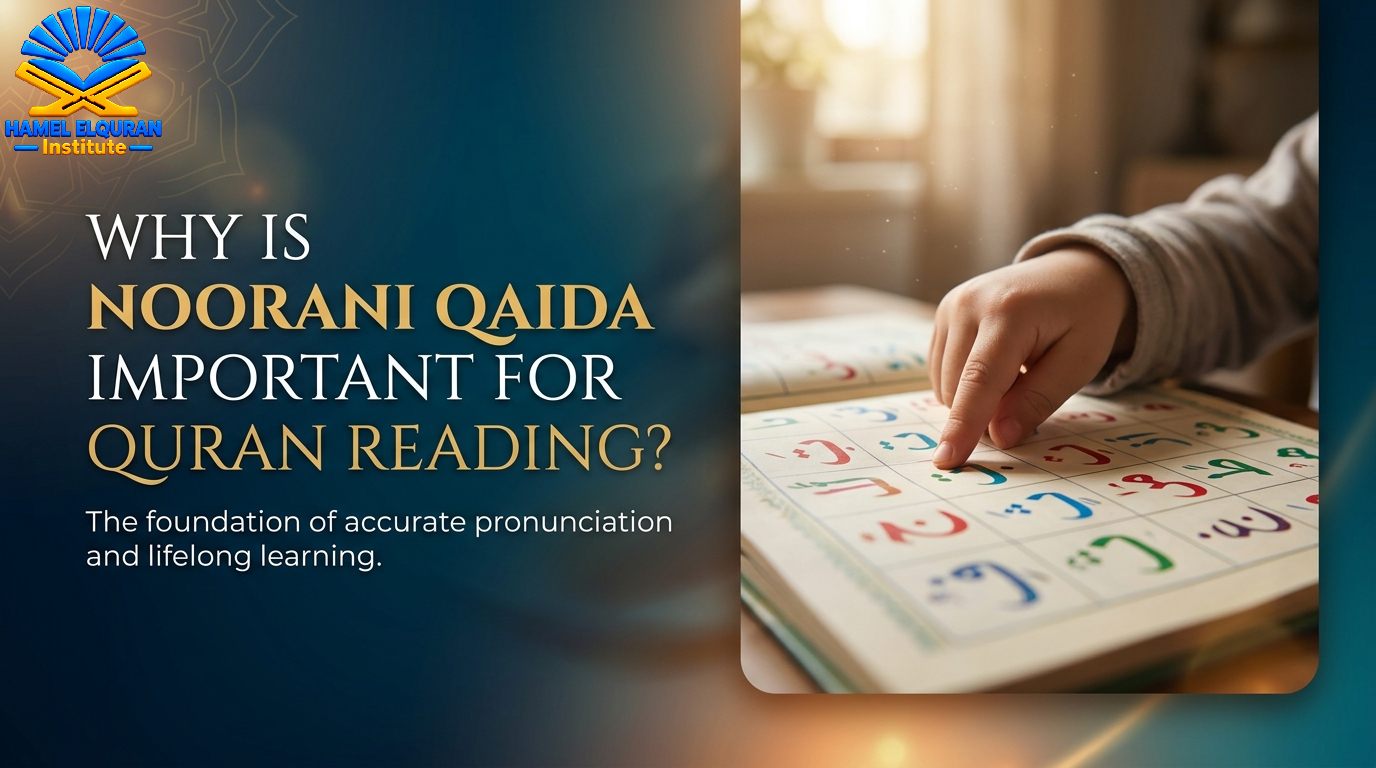
Learning Arabic reading fundamentals helps students prepare for Quran recitation. To achieve this, Noorani Qaida introduces several skills that beginners need before progressing to longer passages.
- Arabic letter recognition: First, identify letters and distinguish between similar shapes and sounds.
- Vowel recognition: Next, understand how short vowel marks affect pronunciation.
- Pronunciation practice: With appropriate guidance, learn to produce Arabic sounds more accurately.
- Connected reading: Then, combine letters to recognize and read words.
- Reading confidence: Gradually progress from individual letters to simple Quranic text.
- Preparation for Tajweed: Finally, build foundational skills that support later study of Quranic recitation rules.
However, Noorani Qaida does not replace continued reading practice or formal Tajweed instruction. Instead, it helps learners develop the basic skills they need for the next stage of Quran study.
Learn Noorani Qaida Online: What Will You Study?
A structured Noorani Qaida course moves from basic letter recognition to more advanced reading exercises. However, the pace depends on the learner’s current skills, understanding, and practice routine.
After developing these fundamentals, students can explore Learn Quran Online with Tajweed to understand how foundational reading skills support accurate Quran recitation.
1. Arabic Alphabet Recognition
Students learn to identify the Arabic alphabet and recognize differences between letters with similar shapes. They also become familiar with how letters may change appearance depending on their position within a word.
With regular practice, learners can identify letters more confidently and reduce confusion during reading.
2. Correct Letter Pronunciation
Recognizing a letter is only the first step. Equally important, students must learn how to pronounce it correctly. Beginners practise Arabic sounds and identify differences between letters that may be difficult to distinguish.
Through repetition and guided exercises, teacher feedback can help learners recognize pronunciation errors and work on challenging sounds.
3. Harakat: Short Vowel Marks
Harakat are marks that guide the pronunciation of Arabic letters. At the beginner level, students typically study three essential short vowels:
- Fathah: Generally represents a short “a” sound.
- Kasrah: Generally represents a short “i” sound.
- Dammah: Generally represents a short “u” sound.
By combining letters with these marks, students learn how vowel changes affect reading.
4. Madd: Long Vowel Sounds
Madd involves extending vowel sounds in Arabic recitation. At this stage, learners are introduced to long vowel patterns and practise distinguishing them from short vowels.
Consequently, these exercises help students pay attention to vowel length. Later, they can study more detailed Madd rules during subsequent Tajweed lessons.
5. Tanween
Tanween refers to double vowel marks that appear at the ends of certain Arabic words. As part of their practice, students learn to recognize these marks and apply their basic pronunciation in reading exercises.
As they progress, learners can also study further rules related to Tanween in more advanced Quran recitation lessons.
6. Sukoon and Shaddah
Sukoon indicates that a letter has no short vowel, while Shaddah indicates a doubled consonant sound. Therefore, understanding these marks helps learners read Arabic words more accurately.
To reinforce this understanding, students practise identifying the marks and applying them alongside letters and vowel patterns.
7. Connecting Letters and Reading Words
Once students understand individual letters and basic vowel patterns, they can practise reading connected letters. Gradually, they combine sounds into words and work with increasingly complex examples.
Learners who also want to strengthen their Arabic language skills can consider Online Arabic Classes to complement their reading practice.
8. Reading Simple Quranic Text
After demonstrating sufficient foundational skills, learners can begin reading suitable Quranic words and short passages with teacher guidance.
At this point, the teacher can identify pronunciation difficulties, correct recurring mistakes, and determine whether additional practice is needed before the student progresses. Similarly, students who need dedicated support with recitation rules can explore quran tajweed classes when they are ready for more focused Tajweed study.
Noorani Qaida Learning Stages
The following table summarizes a typical learning progression. Keep in mind, however, that it is a general guide rather than a fixed schedule, since students develop at different rates.
| Learning stage | Main focus | Learning objective |
|---|---|---|
| Stage 1 | Arabic alphabet | Recognize letters and their shapes |
| Stage 2 | Pronunciation | Produce letter sounds more accurately |
| Stage 3 | Harakat | Read letters with short vowel marks |
| Stage 4 | Madd, Tanween, Sukoon, and Shaddah | Recognize fundamental reading patterns |
| Stage 5 | Connected letters and words | Read simple Arabic words |
| Stage 6 | Quranic text | Apply foundational skills to Quran reading |
Ultimately, progress depends on previous experience, practice, lesson frequency, and the learner’s ability to apply each concept. For this reason, a teacher can recommend additional review when necessary.
Who Can Learn Noorani Qaida Online?
Online Noorani Qaida lessons can support learners of different ages and backgrounds. However, the appropriate starting point depends on their current reading ability and learning goals.
Noorani Qaida for Kids
Children can develop Arabic reading skills through short, structured lessons that introduce concepts gradually. For example, repetition, clear examples, and age-appropriate exercises help them practise letters and pronunciation.
At home, parents can support learning by providing a quiet study space and encouraging regular revision without placing unnecessary pressure on the child.
Noorani Qaida for Adults
Adults who are new to Arabic can begin with the alphabet and basic pronunciation. Although previous experience can be helpful, it is not essential because lessons can start at the learner’s current level.
Similarly, adults who studied Arabic previously may benefit from reviewing vowel marks, connected letters, and pronunciation before returning to Quran reading.
Noorani Qaida for Non-Arabic Speakers
Non-Arabic speakers may need additional practice with unfamiliar sounds and Arabic pronunciation. For this reason, a structured learning sequence helps them understand the relationship between written letters, vowel marks, and spoken sounds.
Furthermore, individual instruction gives learners opportunities to ask questions and revisit difficult concepts. Those who want to expand their Islamic knowledge beyond Quran reading can also explore Islamic Studies Online Classes to study essential Islamic teachings alongside their Quran learning journey.
Learners Who Want to Review the Basics
Some learners recognize Arabic letters but struggle with vowel marks or connected words. Meanwhile, others may need to correct pronunciation habits developed through previous study.
By identifying these difficulties, learners can focus on the skills they need to improve rather than repeating familiar material unnecessarily.
Benefits of Learning Noorani Qaida Online
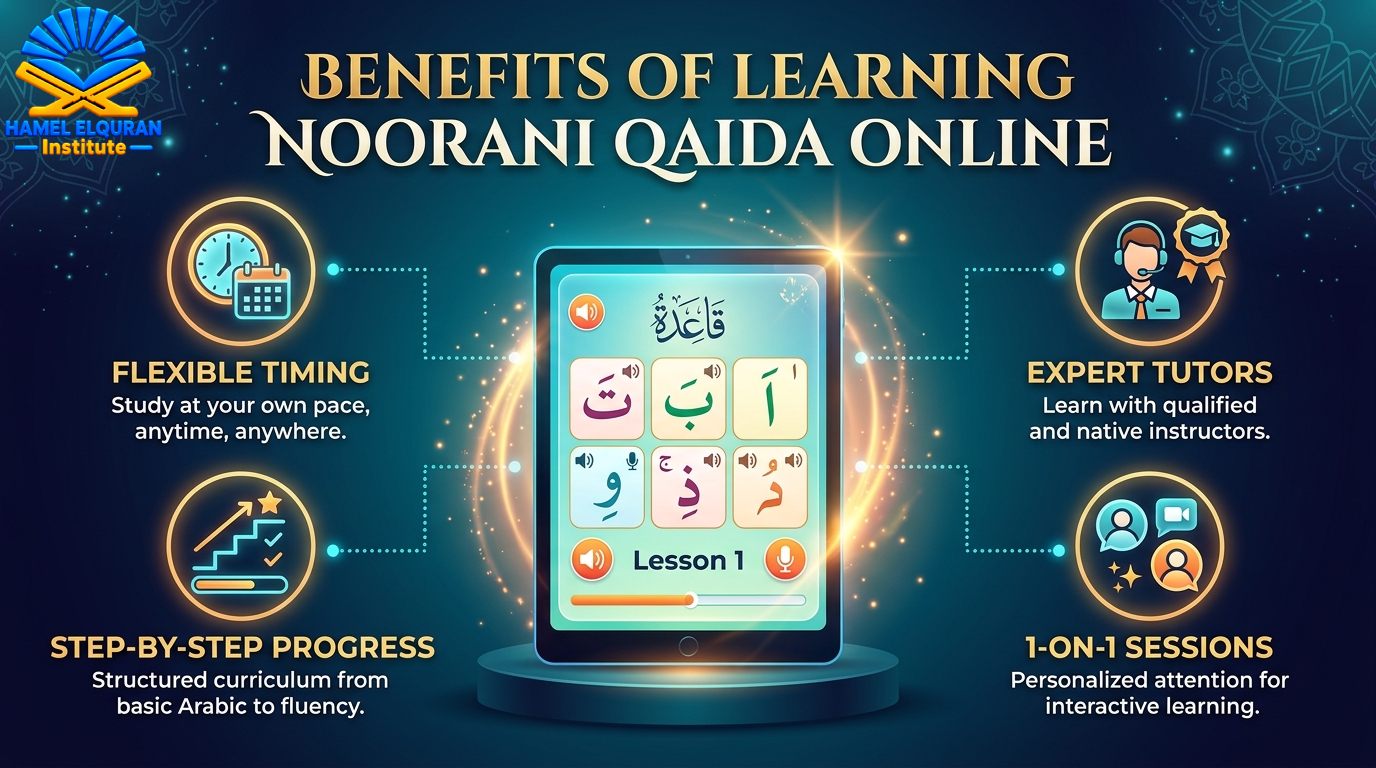
Online lessons allow students to study from home while receiving structured instruction. In addition, this format offers several practical benefits for learners and their families.
Convenient Learning From Home
Students can attend lessons without traveling to a physical classroom. As a result, they can save travel time and focus on learning. A suitable device, reliable internet connection, and quiet learning space can also create a better study environment.
Flexible Scheduling
Online lessons can fit around school, work, and family responsibilities. Therefore, choosing a realistic schedule can make regular learning and revision easier to maintain.
Focused Learning
Individual instruction gives the teacher more time to address a student’s questions and difficulties. For example, learners can repeat challenging exercises and receive feedback suited to their current level. Those seeking individual guidance can also explore a Quran Tutor Online to learn about options for personalized Quran instruction.
Progress Monitoring
Tracking progress helps identify mastered concepts and areas that need further attention. For instance, a learner may recognize letters confidently but still need additional practice with short vowels or connected words. By reviewing these areas, teachers can suggest suitable exercises for the next lesson.
Preparation for Continued Quran Study
Noorani Qaida builds foundational reading skills that support the transition to Quranic text. However, students still need continued practice and appropriate guidance to improve accuracy and develop their recitation skills.
How to Choose the Right Online Noorani Qaida Course
Before enrolling, consider the teacher’s qualifications, lesson format, and approach to tracking progress. By comparing these factors, you can choose an arrangement that suits the learner’s needs.
1. Look for Qualified Teachers
Teachers should understand Arabic reading fundamentals and explain pronunciation clearly. Additionally, experience teaching beginners can be useful when students need extra examples or alternative explanations.
2. Choose Lessons That Match Your Level
Some learners need to begin with letter recognition, while others are ready to practise vowel marks or connected words. For this reason, a suitable course should account for differences in reading ability and prior experience.
3. Consider One-to-One Instruction
Individual lessons allow teachers to concentrate on one student’s needs. As a result, learners who need focused pronunciation guidance can receive more opportunities to practise and ask questions.
4. Check Scheduling Options
Choose lesson times that fit the student’s regular commitments. Most importantly, the schedule should be realistic enough to maintain consistently over time.
5. Ask How Progress Is Monitored
Regular feedback helps students understand what they have learned and what needs more practice. Therefore, ask how the teacher reviews completed material and recommends the next steps.
Why Choose Hamel El-Quran Academy?
Hamel El-Quran Academy offers online Quran learning with features designed to support students as they develop their reading skills. These include qualified teachers, one-to-one lessons, student progress tracking, and flexible scheduling.
Qualified Teachers
Qualified teachers guide learners through Arabic reading fundamentals and explain difficult concepts. In addition, they provide feedback to help students improve their pronunciation and understanding.
One-to-One Lessons
Individual lessons allow teachers to focus on the student’s current level and learning needs. Consequently, students have opportunities to ask questions, practise challenging examples, and receive focused attention.
Student Progress Tracking
Monitoring student progress helps identify strengths and areas that require additional practice. Based on this information, teachers can adjust lesson plans and help learners understand their development.
Flexible Scheduling
Flexible scheduling helps students fit Quran learning into their existing routines. For example, families and adult learners can discuss lesson arrangements that suit their availability.
Ultimately, these features can support a structured learning experience. However, each student’s progress depends on their starting level, regular practice, and ability to apply what they learn.
Start Learning Noorani Qaida Online Today
Build a strong foundation in Quran reading with Hamel El-Quran Academy. Through guidance from qualified teachers, one-to-one instruction, progress tracking, and flexible scheduling, students can work toward their individual learning goals. Contact us today to discuss your needs and explore suitable learning options.

How to Practise Noorani Qaida at Home
Regular revision reinforces what students learn during lessons. Therefore, a manageable routine focused on accuracy can help learners retain foundational skills.
- Review previous lessons: First, revisit letters, vowel marks, and patterns already covered.
- Read aloud: Next, practise assigned examples and pay attention to pronunciation.
- Repeat challenging material: If a sound or reading pattern feels unfamiliar, spend extra time reviewing it.
- Listen carefully: In addition, follow the teacher’s pronunciation examples and apply the feedback.
- Ask questions: Whenever a concept seems confusing, note it and discuss it during the next lesson.
- Maintain a routine: Finally, set aside a realistic amount of time for regular revision.
For children, parents can encourage regular practice and help maintain a consistent schedule. However, when pronunciation is uncertain, the teacher should provide the correction to avoid reinforcing mistakes.
Common Mistakes to Avoid When Learning Noorani Qaida
Beginners may encounter several difficulties while learning Arabic reading. Fortunately, understanding these mistakes helps students learn Noorani Qaida Online more effectively and build accurate reading habits.
Rushing Through Lessons
Moving forward before understanding a concept can make later reading patterns harder to learn. Therefore, students should master each concept before progressing to the next lesson.
Confusing Similar Letters
Some Arabic letters have similar shapes or sounds. To reduce confusion, learners can practise their distinguishing features and listen carefully to clear pronunciation examples.
Ignoring Vowel Marks
Vowel marks affect how Arabic letters are pronounced. For this reason, students learning Noorani Qaida should pay attention to these marks rather than focusing only on the letters themselves.
Practising Without Feedback
Independent practice is useful. However, repeated mistakes may become habits if they go uncorrected. Regular feedback helps learners identify and address pronunciation difficulties while they learn Noorani Qaida Online.
Being Inconsistent
Long gaps between practice sessions can make recently learned material harder to remember. As a result, a realistic routine supports regular revision and helps students retain what they learn.
Comparing Progress With Others
Learners differ in age, previous experience, and available practice time. Therefore, focusing on individual improvement is more useful than expecting everyone to progress at the same speed. Consistent practice helps students learn Noorani Qaida Online at a pace suited to their needs.
What Comes After Noorani Qaida?
Completing Noorani Qaida can prepare students for further Quran study. However, the next step should depend on their reading ability and individual learning goals.
Reading the Quran
Once students can recognize letters, apply basic vowel patterns, and read connected words, they may begin practising suitable Quranic passages with guidance. Meanwhile, a teacher can correct mistakes and help improve reading accuracy.
Learning Tajweed
Tajweed covers the rules that guide Quranic recitation, including articulation points, letter characteristics, and rules that apply in different reading contexts. Although Noorani Qaida provides useful groundwork, dedicated Tajweed lessons are necessary to study these rules systematically.
Improving Fluency and Accuracy
Continued reading practice helps students become more familiar with Quranic words and patterns. At the same time, fluency should develop alongside accurate pronunciation rather than at its expense.
Maintaining a Learning Routine
Regular lessons and revision help learners continue developing their skills. Furthermore, discussing progress with a teacher can help establish suitable goals for the next stage.
Frequently Asked Questions About Learning Noorani Qaida Online
Find answers to common questions about learning Noorani Qaida online, lesson structure, learning time, and preparing for Quran reading.
1. Can beginners learn Noorani Qaida online?
Yes. Beginners can study Arabic letters, pronunciation, vowel marks, and connected words through structured online lessons. For the best results, choose a course that matches the learner’s level and provides regular feedback.
2. How long does it take to complete Noorani Qaida?
The time required depends on the learner’s age, previous experience, lesson frequency, and practice routine. For example, some students need additional time to master pronunciation or reading patterns. Therefore, progress should be measured by understanding rather than a fixed deadline.
3. Is Noorani Qaida suitable for adults who cannot read Arabic?
Yes. Adults can start with Arabic letter recognition and basic pronunciation before progressing to vowel marks and connected words. In this way, a structured approach helps learners develop the foundational skills needed for Quran reading.
4. Can I learn Quran reading after completing Noorani Qaida?
Yes. Noorani Qaida can prepare learners to read Quranic passages once they have developed the necessary foundational skills. Afterward, continued practice and teacher guidance can support accuracy, while Tajweed lessons introduce Quranic recitation rules in greater detail.
Conclusion
Learning Noorani Qaida online helps beginners develop essential Arabic reading skills and prepare for Quran recitation. With regular practice and guidance from qualified teachers, students can gradually improve their pronunciation and reading accuracy.
Hamel El-Quran Academy offers one-to-one lessons, progress tracking, and flexible scheduling to support individual learning needs. Therefore, students can begin building their Quran reading skills through a learning approach suited to their needs.