
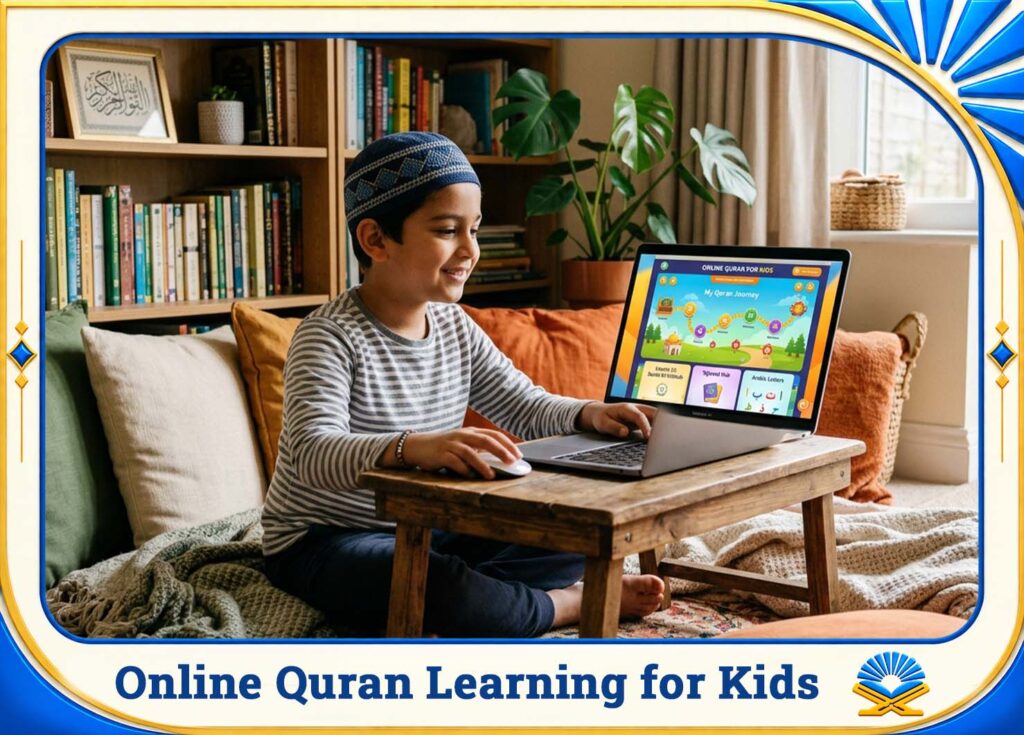
Online Quran learning for kids gives children an opportunity to build Quran reading, pronunciation, Tajweed, and memorization skills through structured lessons from home.
For this approach to work well, however, children need more than access to an online class. They need age-appropriate instruction, a suitable learning level, regular practice, direct correction, and a teacher who can adapt the lesson to their progress.
For parents considering a program such as Hamel El-Quran Academy, understanding how the learning process works can make it easier to choose suitable lessons for their child.
From assessing the child’s starting level and building basic reading skills to developing Tajweed, memorization, and regular revision, each stage should support the child’s actual needs. This guide explains what parents can expect from online Quran learning, how to evaluate a teacher and lesson structure, and how to support steady progress at home.
What Does Online Quran Learning for Kids Include?
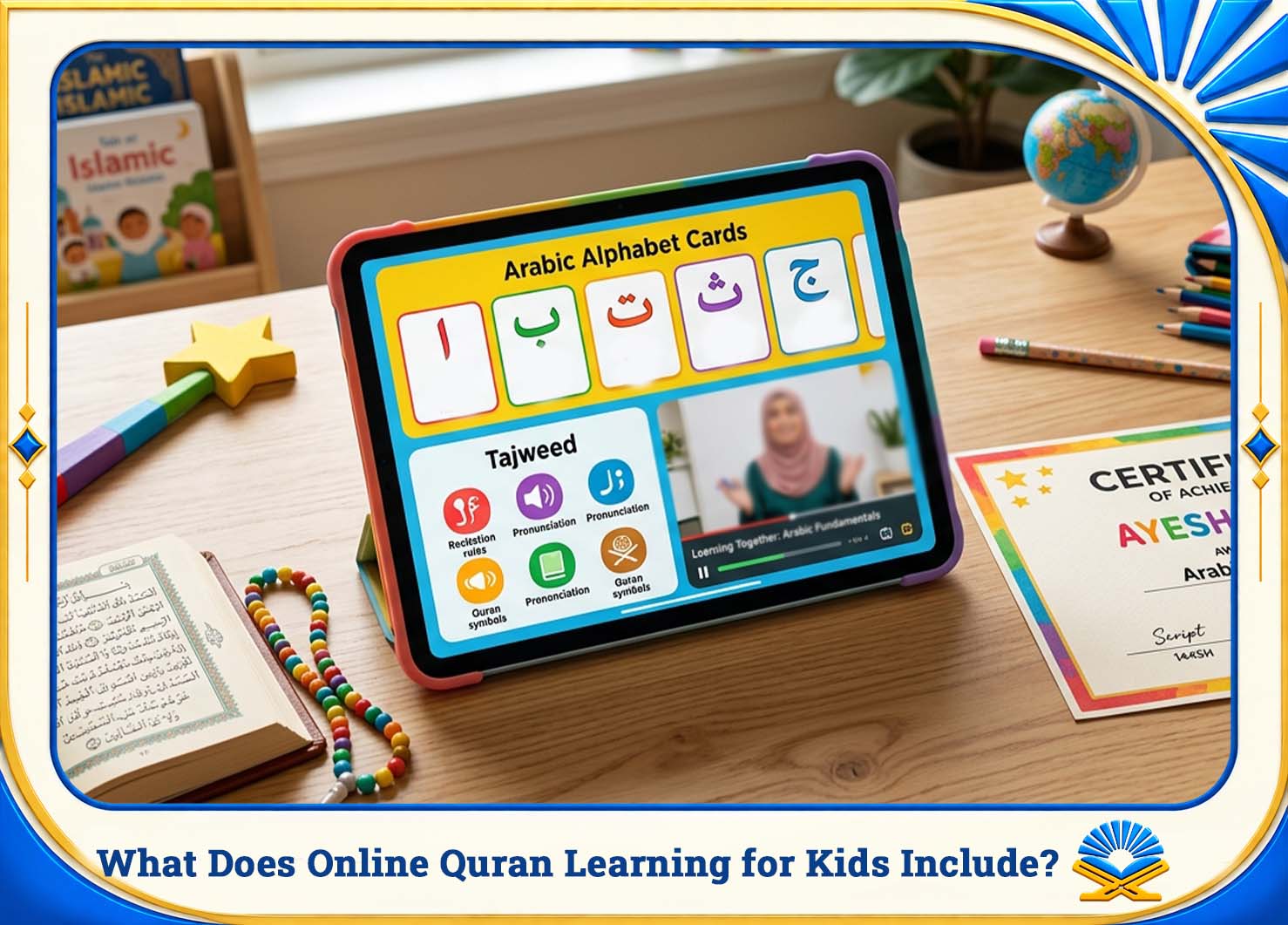
Online Quran learning can cover several areas depending on a child’s current ability and learning goals. A beginner may need to start with Arabic letters and basic reading skills, while a child who can already read may need more attention to pronunciation, Tajweed, or memorization. A learning plan may include:
- Arabic letters and their correct pronunciation
- Noorani Qaida or another suitable foundation for Quran reading
- Connecting letters and reading Quranic words
- Reading short Surahs
- Basic Tajweed rules
- Correcting common pronunciation mistakes
- Quran memorization and revision
- Understanding selected meanings when appropriate
- Islamic studies related to a child’s learning level
The exact content should depend on the child’s needs rather than following the same sequence for every learner.
Start Your Quran Learning Journey Today
Are you ready to learn the Quran with confidence and consistency? Hamel El-Quran Academy offers online Quran learning opportunities designed to help students improve their Quran reading, recitation, Tajweed, and memorization from home. With structured lessons and personalized guidance, you can develop your skills step by step according to your learning goals.
Join Hamel El-Quran Academy today and take the next step toward building a stronger and more meaningful connection with the Quran.

How Does Online Quran Learning for Kids Work?
The process usually begins by understanding what the child can already do. A beginner who is still learning Arabic letters needs a different starting point from a child who can read the Quran but makes frequent pronunciation mistakes.
After identifying the child’s level, lessons can focus on one skill at a time. The child practices the skill with the teacher, receives correction, and then applies it while reading Quranic words or verses. A typical learning process may follow this pattern:
- Review material from the previous lesson.
- Introduce a new reading or recitation skill.
- Let the child practice it aloud.
- Correct pronunciation or reading mistakes.
- Repeat difficult sounds, words, or rules.
- Apply the new skill while reading from the Quran.
- Give the child material to review before the next lesson.
This structure makes the lesson an active learning experience rather than simply a video call in which the child listens to the teacher.
Online Quran Learning for Kids by Learning Level
Children do not all begin Quran study from the same point. Organizing learning according to ability can help prevent lessons from becoming either too difficult or too easy.
- Beginner Level
- At the beginner stage, children may need to learn Arabic letters, letter sounds, joining letters, and basic reading patterns. The focus should be on building a reliable foundation before expecting the child to read longer Quranic passages.
- Noorani Qaida can be useful at this stage because it introduces reading skills progressively. The child can practice individual sounds and combinations before applying them to Quranic text.
- Early Quran Reader
- Once a child can recognize and connect letters, the focus can gradually move toward reading words, short verses, and Surahs. At this stage, regular correction becomes important because children can develop habits that become harder to change if mistakes are repeated.
- Lessons can also introduce simple Tajweed concepts when the child is ready to understand and apply them.
- Developing Quran Reader
- Children who already read the Quran may need a different type of support. Their lessons can focus more on fluency, pronunciation, Tajweed, memorization, revision, and correcting recurring errors.
- The goal is not simply to move through more pages. Instead, the child should gradually improve the accuracy and quality of Quran recitation.
What Do Kids Learn First?
The first step depends on the child’s existing knowledge. A child who has never learned Arabic letters should not be expected to begin by reading complete Surahs. For a beginner, learning may start with:
- Recognizing Arabic letters
- Learning the correct sound of each letter
- Understanding how letters connect
- Practicing basic vowel sounds
- Reading simple combinations
- Moving from individual words to short Quranic passages
Once these skills become familiar, the child can begin applying them to Quran reading. This gradual approach can make quran lessons for kids easier to follow because each new skill builds on something the child has already practiced.
Why Is Noorani Qaida Useful for Beginners?
Noorani Qaida is commonly used as a foundation for learners who are developing basic Quran reading skills. Rather than asking a beginner to immediately read complete Quranic passages, it introduces important reading patterns in smaller steps.
For children, this can provide a clear progression from letters and sounds toward connected words and Quranic reading.
However, the material alone does not guarantee progress. Children still need to hear correct pronunciation, practice it themselves, and receive feedback when they make mistakes.
What Happens During an Online Quran Lesson for Kids?
A productive lesson should give the child enough time to participate and practice. The teacher should not do most of the reading while the child simply listens. A lesson may include several stages:
- Reviewing Previous Work
- The teacher begins by checking what the child learned previously. This helps identify whether the skill has been understood or needs more practice.
- Introducing a New Skill
- The teacher explains the next reading, pronunciation, Tajweed, or memorization point at a level the child can understand.
- Guided Practice
- The child reads or recites while the teacher listens carefully. The teacher can then identify specific mistakes rather than giving only general instructions.
- Correction and Repetition
- If a child struggles with a sound, word, or rule, the teacher can isolate the difficult part and let the child practice it several times.
- Applying the Skill
- The child then uses the new skill while reading Quranic text. This connects the explanation with actual Quran reading.
- Review
- The lesson ends with material for the child to practice before the next session.
This type of structure helps online quran teaching for kids remain focused on actual learning outcomes.
What Is the Teacher’s Role in Online Quran Learning for Kids?
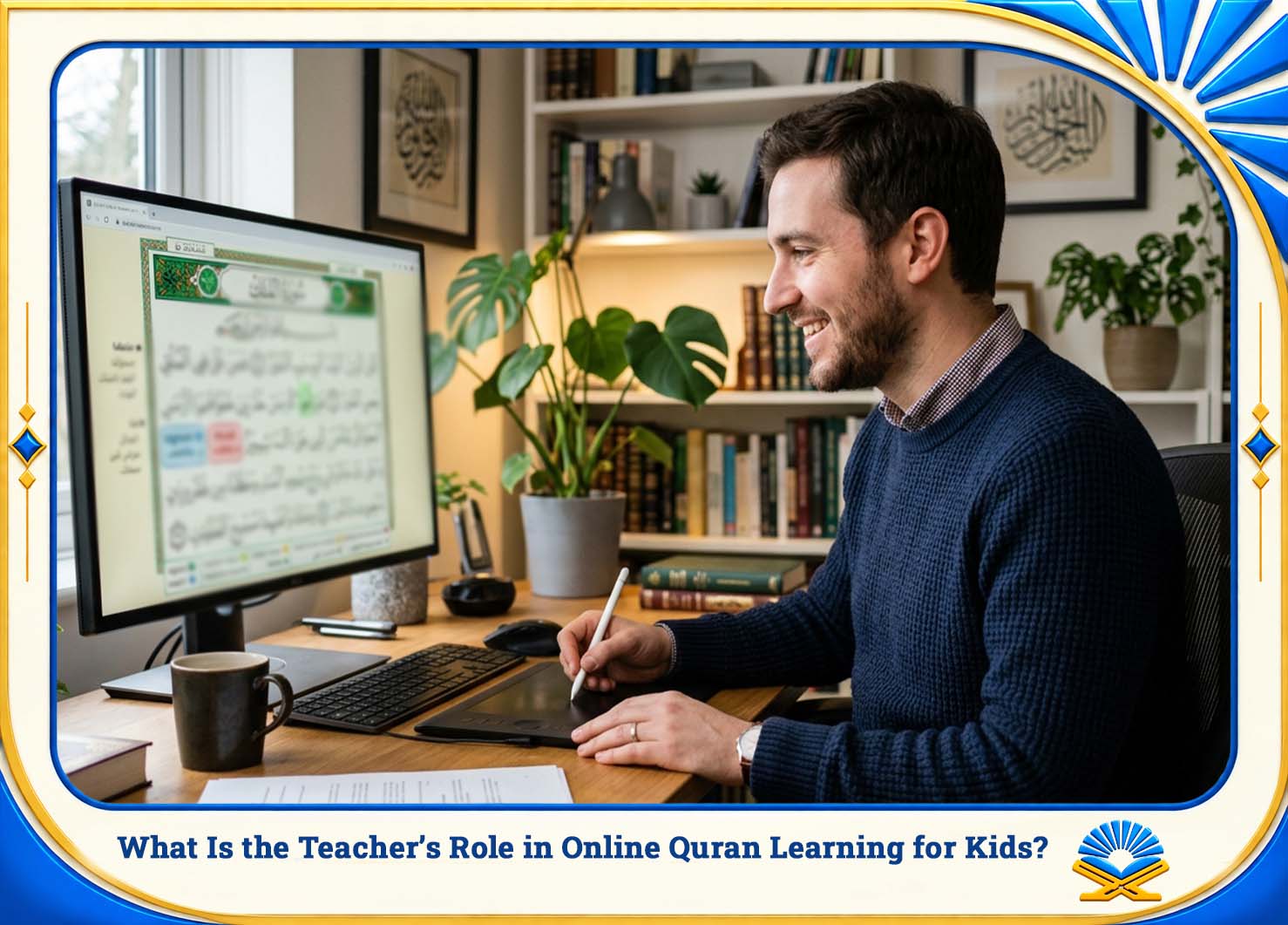
The teacher plays an important role because children often cannot recognize their own recitation mistakes. A teacher can listen to the child’s reading and identify problems with pronunciation, letter sounds, fluency, or the application of Tajweed rules. Instead of moving forward whenever the child makes an error, the teacher can return to the difficult point and explain it again.
The teacher may also adjust the pace of the lesson. If a child understands a skill quickly, the lesson can progress. If the child needs more practice, the teacher can spend additional time on the same concept. This makes the learning process more responsive to the child’s actual performance.
How Can Parents Choose a Suitable Quran Teacher for a Child?
Choosing a teacher involves more than checking whether the teacher can teach Quran. The teaching approach should also suit the child’s age, level, personality, and learning needs. Parents can consider questions such as:
- Does the teacher explain concepts in a way the child can understand?
- Does the teacher listen carefully to the child’s recitation?
- Are pronunciation and Tajweed mistakes corrected during the lesson?
- Can the teacher adjust the pace when the child needs more practice?
- Does the child have enough opportunities to participate?
- Does the teacher encourage the child while still correcting mistakes?
- How does the teacher communicate progress to parents?
A good learning relationship can make lessons easier for a child to follow. At the same time, parents should focus on observable teaching practices rather than relying only on general descriptions.
What Might a Beginner Quran Lesson Look Like?
Consider a child who is learning Arabic letters for the first time. The lesson might begin with a short review of letters learned previously. The teacher then introduces a small group of new letters and demonstrates their sounds. The child repeats each sound and receives correction when needed.
After that, the teacher may combine familiar letters into simple reading exercises. The child practices them aloud while the teacher listens. If one sound remains difficult, the teacher can return to it before moving forward. The child then reviews the same material after the lesson.
This example shows why an effective online quran class for kids should be built around interaction, correction, practice, and gradual progress.
When Should a Child Start Quran Reading?
There is no single starting age that works for every child. Readiness can depend on attention span, familiarity with Arabic letters, ability to follow instructions, and interest in learning.
Some children may be ready to begin structured Quran reading at a relatively young age, while others may benefit from more preparation first. Parents can look for signs such as:
- The child can focus on a short learning activity.
- The child is interested in letters or Quran recitation.
- The child can repeat sounds after an instructor.
- The child can follow simple instructions.
- The child is willing to practice regularly.
Starting at the right level is more important than starting at a specific age, because children develop reading skills at different rates.
How Do Quran Lessons for Kids Progress?
Progress should generally move from basic reading skills toward greater accuracy and independence. A child may gradually move through stages such as:
Letters and sounds → connected letters → words → short passages → Quran reading → Tajweed development → memorization and revision
Not every child will follow exactly the same path. Some may need additional practice at one stage before moving forward, while others may progress more quickly.
The important point is to avoid treating progress as simply completing more pages. Accurate reading and strong foundations matter as much as moving ahead.
What Are the Benefits of Online Quran Learning for Kids?
Online learning can offer practical and educational benefits when the lessons are structured around the child’s needs.
- Individual Attention
A child can receive direct feedback during reading and recitation. This makes it easier to identify specific mistakes instead of allowing them to continue unnoticed.
- Flexible Learning Environment
Learning from home can remove some of the logistical challenges associated with traveling to a physical location. This can make regular lessons easier to organize for some families. - Personalized Pace
Children learn at different speeds. A suitable online program can allow more time for difficult skills instead of requiring every learner to follow the same pace. - Immediate Correction
Recitation depends heavily on accurate pronunciation. Receiving correction while reading can help children recognize mistakes and practice the correct form. - Gradual Skill Development
Online learning can support a progression from basic reading to more advanced Quran recitation, Tajweed, and memorization according to the child’s level.
The educational value therefore comes from the quality and structure of the learning process, not simply from the fact that the lesson takes place online.
How Can Parents Keep a Child Engaged During Quran Classes?
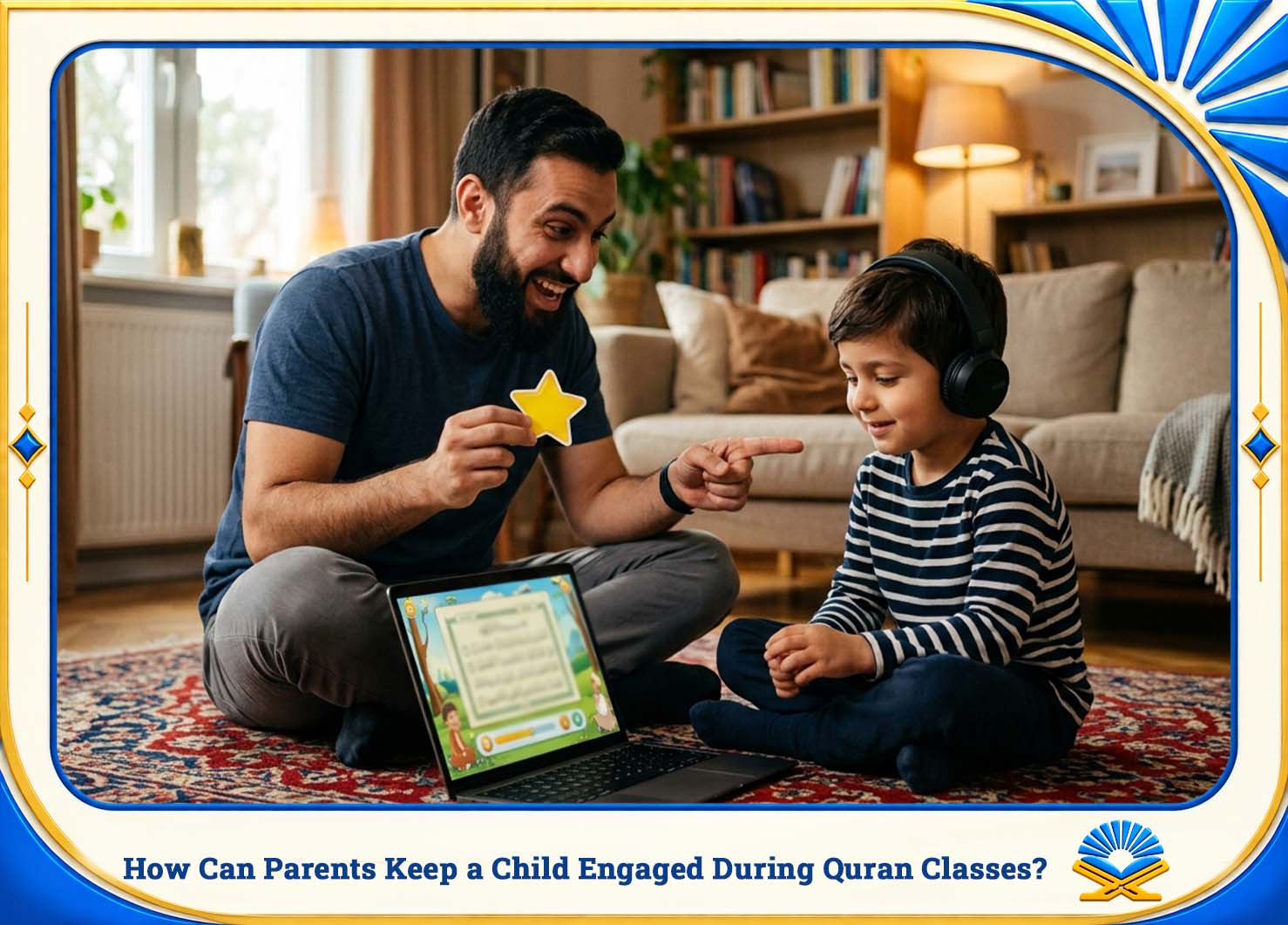
Children may lose focus when lessons feel repetitive or disconnected from their abilities. Parents can support engagement by creating a quiet learning environment and keeping unnecessary distractions away during the lesson.
It can also help to maintain a predictable routine. When children know when their Quran lesson takes place, the activity can become part of their normal schedule.
Parents should also recognize effort rather than focusing only on mistakes. Learning Quran reading requires repetition, and some skills take time to develop.
Short periods of focused practice can be more useful than forcing a child to continue after concentration has disappeared.
How Often Should a Child Attend Quran Classes?
The appropriate frequency depends on the child’s age, level, goals, and ability to practice between lessons. Beginners may benefit from regular sessions because reading skills improve through repeated exposure and practice.
Children who already have stronger reading skills may need a different schedule depending on whether their focus is reading, Tajweed, memorization, or revision. Families in the USA can also consider scheduling needs when exploring online quran classes usa, especially when lesson times need to fit around school and daily routines.
Consistency is usually more useful than creating a demanding schedule that the child cannot maintain. Parents should therefore consider whether the routine gives the child enough time to learn, practice, review, and rest.
What Should a Parent Look for in an Online Quran Class for Kids?
When comparing quran classes for kids, parents can look beyond the class format itself and examine how learning is organized. Families researching the best online quran classes should focus on the educational structure rather than judging a program only by its convenience or online format. Useful questions include:
- Is the child’s level assessed before learning begins?
- Does the teacher listen to the child’s recitation carefully?
- Are pronunciation mistakes corrected during the lesson?
- Does the learning plan match the child’s ability?
- Is there enough time for practice and revision?
- Can the child ask questions during the lesson?
- Are difficult skills explained in a way the child can understand?
- How is progress communicated to parents?
These questions help parents evaluate the educational process rather than choosing a class based only on convenience.
How Can Parents Know If a Child Is Progressing?
Progress can appear in several forms. A child may read more accurately, recognize letters more quickly, pronounce difficult sounds more clearly, or need fewer corrections during recitation.
Parents can also look for improvement in confidence and independence. A child who previously needed constant help may gradually become able to read familiar material with less assistance.
For families using online quran classes for children, progress can also include retaining previously learned Surahs and reciting them with fewer prompts.
The most useful measure is consistent improvement in the child’s actual skills rather than simply counting the number of lessons completed.
What Are Common Problems With Quran Learning for Children?
Several challenges can affect a child’s learning experience and slow progress if they are not addressed early.
- Moving Too Quickly
A child may appear to understand a lesson but still need more practice. Moving forward too quickly can leave gaps in basic reading skills. - Ignoring Pronunciation Errors
Small pronunciation mistakes can become repeated habits. Regular correction helps children recognize and improve them. - Using the Same Pace for Every Child
Children have different abilities and learning speeds. A fixed pace may be too difficult for one child and too slow for another. - Focusing Only on Memorization
Memorizing verses without developing accurate reading and recitation skills can leave important foundations underdeveloped. - Inconsistent Practice
Long gaps between lessons or review sessions can make it harder for children to retain what they have learned.
Recognizing these challenges early allows parents and teachers to adjust the learning approach before frustration develops.
How Can Hamel El-Quran Academy Fit Into a Child’s Learning Journey?
Parents considering online quran classes can use the points above to evaluate whether a learning program matches their child’s needs.
Hamel El-Quran Academy can be considered as one option for families looking for an online Quran learning environment. Before enrolling, parents can discuss the child’s current reading level, learning goals, preferred schedule, and the type of Quran education they want their child to receive.
It is also useful to ask how the child’s level will be assessed, how lessons will be adapted to their progress, and how parents will receive feedback. These details can help families understand whether the learning approach is suitable for their child.
The important step is to choose a program based on the child’s actual educational needs rather than convenience alone.
How Can Parents Support Learning Between Lessons?
The learning process does not have to stop when the online lesson ends. Parents can support progress by giving children a quiet opportunity to review what they learned.
A short review can include reading the same letters, words, verses, or Surahs practiced during the lesson. Parents do not need to act as Quran teachers. Their role can simply be to encourage consistency and help the child follow the practice routine recommended by the teacher. Resources related to al-Quran classes can also help parents understand the broader learning structure their child may follow.
Avoiding excessive pressure is also important. The goal of home practice should be reinforcement, not turning every review session into another formal lesson.
Is Online Quran Learning Suitable for Every Child?
Online learning can work well for many children, but the experience may differ from one learner to another.
A child who can focus, follow instructions, and participate through a screen may adapt comfortably to online lessons. Another child may need more parental support, shorter learning periods, or additional time to become comfortable with the format.
Parents should therefore observe how the child responds during the first stage of learning. If the child struggles to remain engaged, the solution may involve changing the lesson structure, pace, or routine rather than assuming that the child cannot learn Quran online.
What Should Parents Ask Before Enrolling?
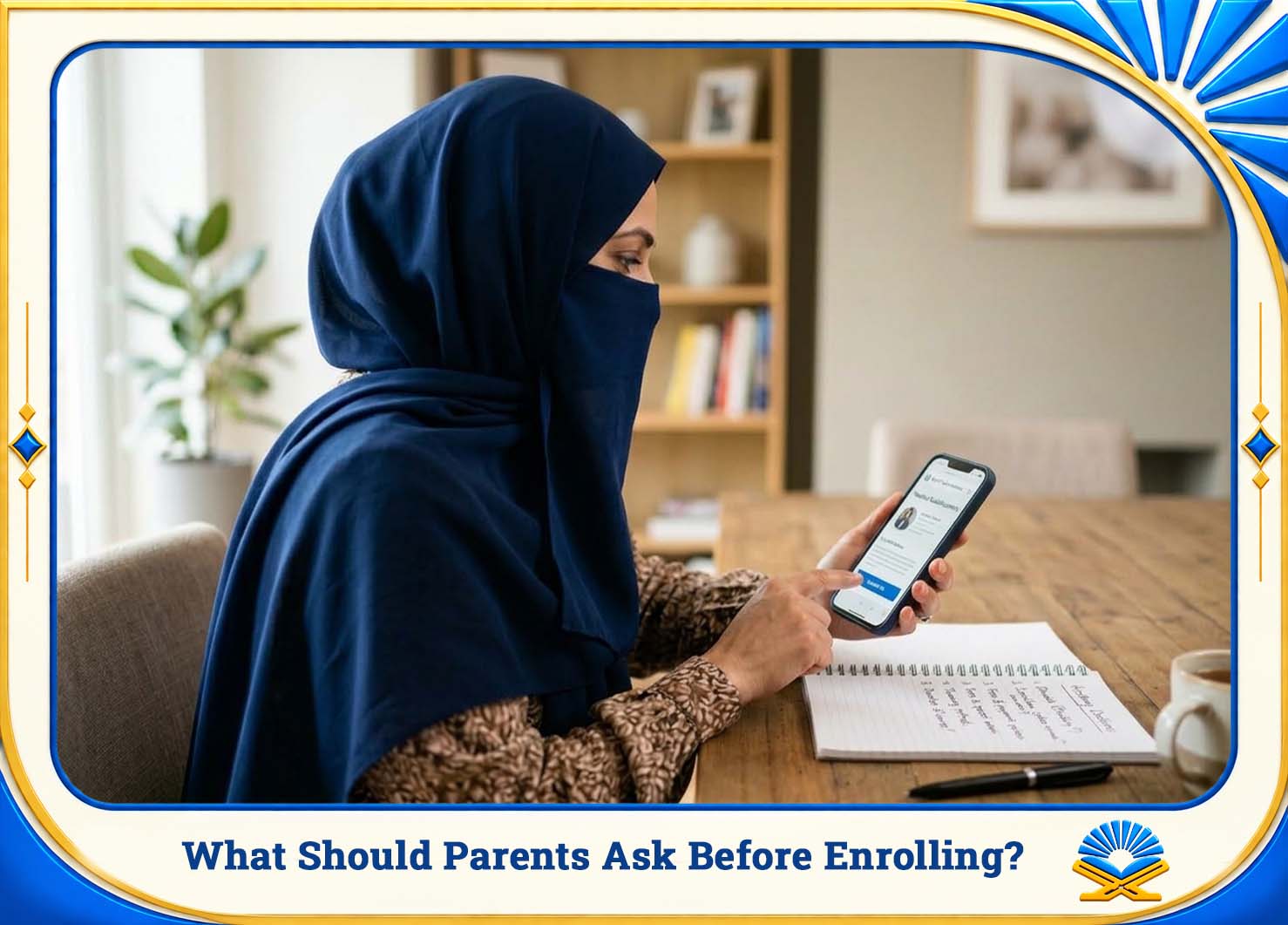
Before choosing an online Quran program, parents can ask practical questions about the learning process. For example:
- How is the child’s Quran reading level determined?
- What does the learning plan focus on first?
- How are pronunciation and Tajweed mistakes corrected?
- How is progress reviewed?
- What kind of practice should the child complete between lessons?
- How can parents receive updates about their child’s development?
- Does the teaching approach match the child’s age and current ability?
Clear answers can help parents understand what the child will actually experience rather than relying only on general promises.
Frequently Asked Questions
Here are answers to some common questions parents may have about online Quran learning for kids.
Is online Quran learning effective for young beginners?
It can be effective when the lessons match the child’s level and provide enough interaction, practice, correction, and review. The learning format itself is less important than how well the teaching process supports the child’s needs.
How can a child improve Quran pronunciation online?
The child needs to read or recite aloud while the teacher listens and identifies specific pronunciation errors. Repeating difficult sounds and applying them in Quranic words can help reinforce correct pronunciation.
Should children learn Tajweed before reading the Quran?
Children can begin developing basic Quran reading skills first and then learn Tajweed concepts progressively as they become ready. The timing should match the child’s reading ability and understanding.
What can parents do if a child becomes frustrated with Quran lessons?
Parents can first identify the reason for the frustration. The lesson may be too difficult, too repetitive, too long for the child’s attention span, or lacking enough practice and interaction. Discussing the issue with the teacher can help determine whether the pace or learning approach should be adjusted.
In conclusion, online Quran learning for kids can provide a structured and flexible way for children to develop Quran reading, pronunciation, Tajweed, and memorization skills from home. However, effective learning depends on choosing lessons that match the child’s age, current level, learning pace, and individual needs. Consistent practice, clear instruction, regular correction, and supportive guidance all play an important role in helping children make steady progress.
For parents exploring options such as Hamel El-Quran Academy, understanding the learning process can make it easier to decide whether an online Quran program is suitable for their child. A thoughtful approach should focus not only on completing lessons, but also on building accurate reading skills, developing confidence, reviewing previous learning, and creating positive habits that support continued Quran study.
With the right learning structure and active support from parents, online Quran learning can become a consistent part of a child’s routine while helping them build skills that develop gradually over time.