
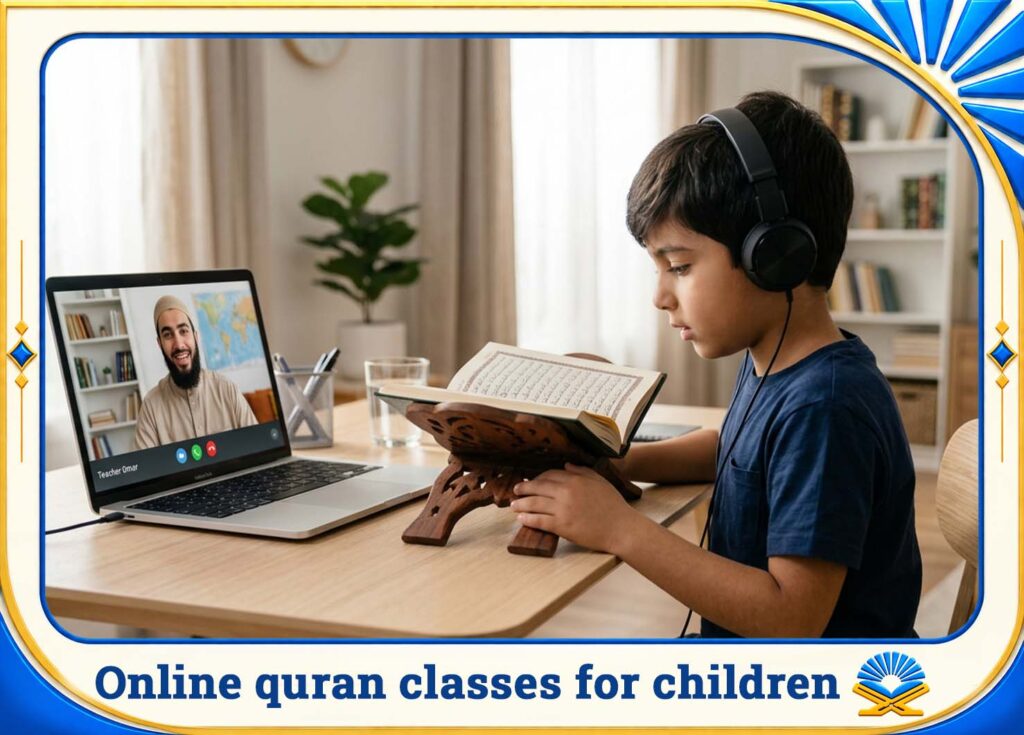
Online Quran classes for children can give parents a practical way to help their children learn Quran reading, recitation, Tajweed, and memorization from home. However, choosing a suitable program involves more than finding a teacher who can recite the Quran correctly. Children need lessons that match their age, attention span, reading ability, and learning pace.
A well-structured program should provide clear learning goals while allowing enough time for practice and correction. Parents also need to understand what their child is learning, where difficulties appear, and how they can support progress between lessons.
This guide explains how online Quran learning works for children, what to look for in a teacher and program, how to identify the right starting level, and what parents should consider before choosing an online Quran provider such as Hamel El-Quran Academy.
How Do Online Quran Classes for Children Work?
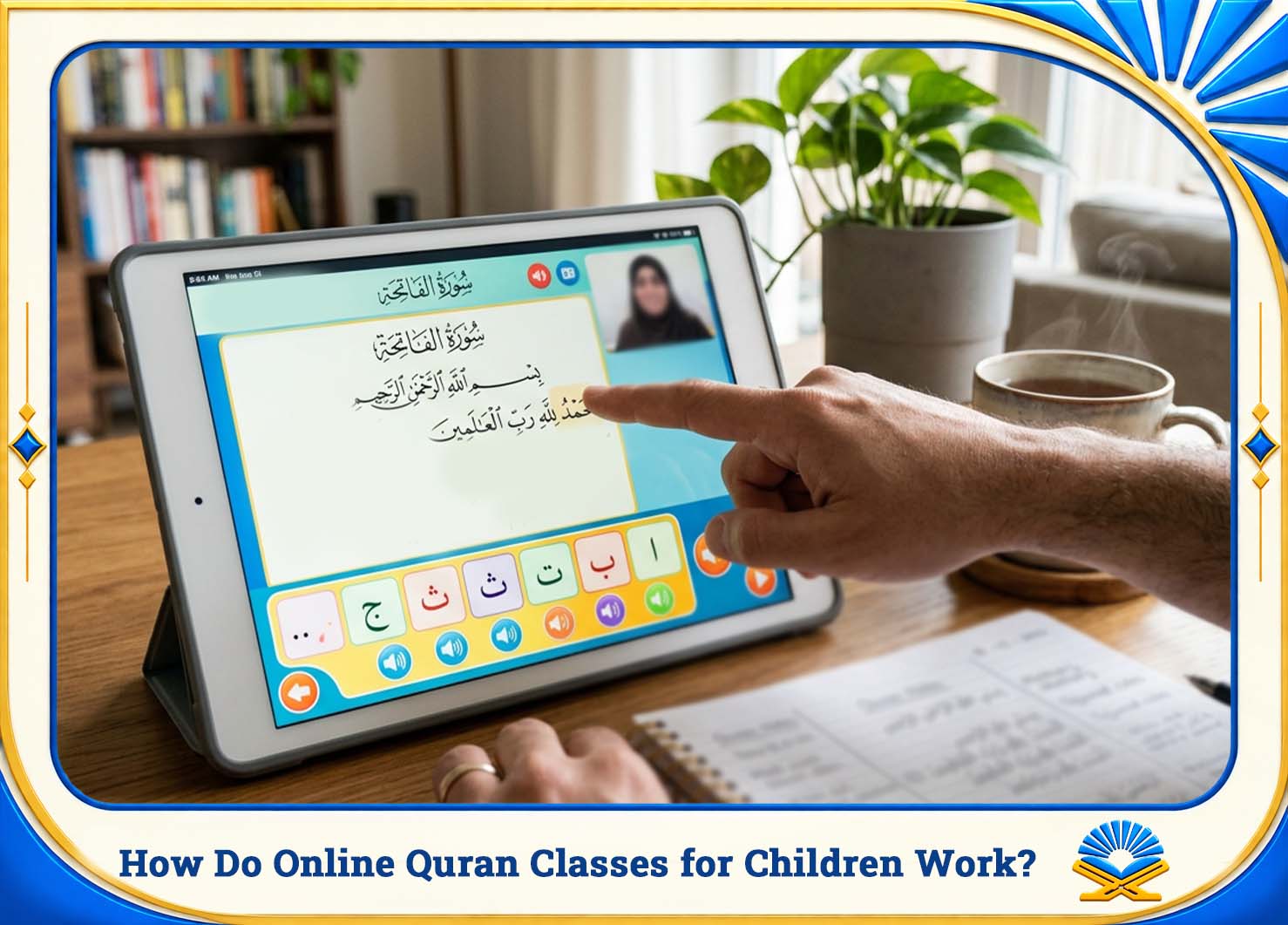
Online Quran classes for children are structured lessons delivered through the internet with a Quran teacher. Depending on the child’s level and goals, lessons may cover Arabic letters, Quran reading, pronunciation, Tajweed, memorization, revision, or a combination of these skills.
Children should not necessarily be taught in the same way as adults. A young learner may need shorter explanations, repetition, frequent practice, and encouragement. Older children who already read Arabic can spend more time improving Tajweed, fluent recitation, memorization, or recurring pronunciation mistakes.
For this reason, parents should look beyond the number of lessons offered. The teaching method, lesson structure, teacher experience, and ability to adapt to the child’s level are equally important.
Start Your Quran Learning Journey Today
Are you ready to learn the Quran with confidence and consistency? Hamel El-Quran Academy offers online Quran learning opportunities designed to help students improve their Quran reading, recitation, Tajweed, and memorization from home. With structured lessons and personalized guidance, you can develop your skills step by step according to your learning goals.
Join Hamel El-Quran Academy today and take the next step toward building a stronger and more meaningful connection with the Quran.

Why Can Online Quran Learning Work Well for Children?
For families exploring Quran education for children, learning from home can remove several practical difficulties. There is no need to travel to a physical location, while parents can organize lessons around school, homework, family activities, and other commitments.
One-to-one lessons can also give the teacher direct time with the child’s recitation. Instead of following a group pace, the teacher can listen carefully, identify mistakes, repeat difficult points, and adjust the lesson when necessary.
This approach can be particularly useful for children who need additional practice or feel uncomfortable reciting in front of several students. The home learning environment still matters, however. A quiet space, reliable internet connection, and suitable device can make online participation easier.
Families can review online Quran classes to understand how online Quran education can be structured before comparing available options.
What Can Children Learn in an Online Quran Program?
A child’s Quran education should develop progressively rather than attempting to cover too many skills at once. Depending on age, previous experience, and learning goals, a program may include:
- Arabic alphabet recognition and pronunciation
- Connecting Arabic letters
- Reading Quranic words
- Correct pronunciation of Quranic sounds
- Basic Tajweed rules
- Quran recitation
- Short Surah memorization
- Regular revision
- Longer-term Hifz planning
- Quran-related Arabic vocabulary
- Basic Islamic manners and values
The exact combination should depend on the child’s starting point. A beginner who is still learning Arabic letters should not follow the same lesson structure as a child who already reads the Quran fluently.
How Should Quran Teachers Teach Young Children?
A child-friendly Quran lesson should simplify difficult skills without removing the structure required for serious learning. Rather than spending an entire lesson explaining rules, a teacher can introduce one concept, demonstrate it, allow the child to practice, and then correct mistakes.
Such an approach allows the learner to apply the information immediately. Useful teaching techniques may include:
- Repeating difficult sounds several times
- Using simple explanations instead of unnecessary terminology
- Asking the child to identify letters or sounds
- Dividing longer passages into smaller sections
- Reviewing previously learned material
- Giving specific encouragement when the child improves
- Changing activities when attention begins to decline
The goal is not to turn every lesson into a game. Children still need discipline, repetition, and consistent practice. A thoughtful teaching approach simply makes those requirements more manageable for their age and ability.
What Should a Parent Look for in a Quran Teacher?
Teaching children requires patience as well as Quranic knowledge. A child may understand a rule but forget it during recitation, pronounce a sound correctly one day and struggle with it the next, or lose concentration during a difficult passage. A suitable teacher should respond calmly and identify the reason behind the difficulty.
For example, when a child repeatedly confuses two Arabic letters, the teacher can isolate the sounds, demonstrate their differences, ask the child to repeat them, and then return to Quranic words containing those letters.
Parents should therefore evaluate more than the teacher’s Quranic knowledge. It is also important to consider whether the teacher explains clearly, listens carefully, corrects mistakes respectfully, and adjusts the lesson to the child’s level.
How Do You Choose the Right Quran Level for Your Child?
Age alone does not determine the correct starting point. Previous Quran experience and Arabic reading ability are equally important. Two children of the same age can have completely different abilities. One may already read Arabic and know several Surahs, while another may still be learning the alphabet. Before enrolling, parents can consider whether their child is:
- A complete beginner.
- Familiar with Arabic letters but unable to read words fluently.
- Able to read simple Quranic passages.
- Able to recite but still making frequent pronunciation mistakes.
- Comfortable with basic reading and ready to study Tajweed.
- Interested in memorization and needing a structured revision plan.
A short assessment or introductory lesson can help identify the most appropriate starting point.
Building a Strong Quran Reading Foundation
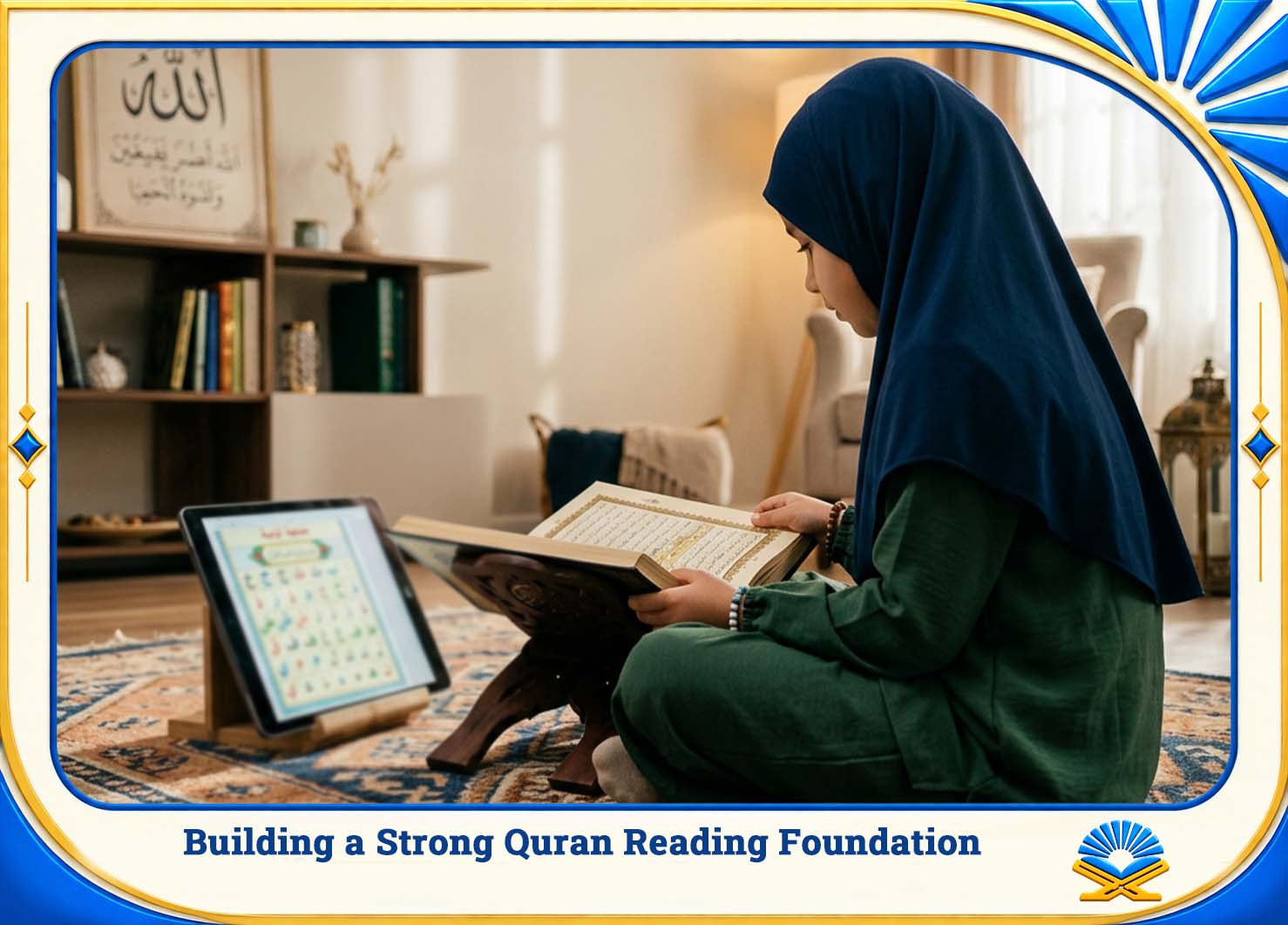
Children who have not yet learned Arabic reading should normally build their foundation before being expected to recite longer Quranic passages. Early lessons may focus on recognizing letters, understanding how their shapes change, connecting letters, and producing their sounds correctly.
A gradual approach is important. If a learner struggles with several letters, moving quickly into full Surahs may create frustration and reinforce incorrect pronunciation.
For beginners, progress becomes easier to manage when the teacher sets small objectives. One lesson might focus on a limited group of letters or reading patterns, followed by guided practice before new material is introduced.
Teaching Tajweed to Children
Tajweed should be introduced according to the child’s ability. Young learners do not necessarily need lengthy theoretical explanations before they begin applying a rule.
Instead, a teacher can introduce a Tajweed concept through examples from the Quran, demonstrate the correct recitation, and then allow the child to practice while reading. As the child becomes more confident, the teacher can gradually introduce concepts such as:
- Makharij
- Sifaat
- Madd
- Ghunnah
- Noon Sakinah and Tanween
- Meem Sakinah
- Qalqalah
- Other relevant recitation rules
The objective is accurate application. Memorizing the names of Tajweed rules without understanding how they affect recitation does not achieve the same purpose.
How Should Quran Memorization Be Structured for Children?
Memorizing the Quran requires a different structure from ordinary reading lessons. Children need both new memorization and regular revision. A practical Hifz routine can divide the work into:
- New verses
- Recent memorization
- Older memorized passages
- Teacher correction
- Independent revision
The amount assigned should reflect the child’s age, school schedule, ability, and consistency. Giving a child more material than they can maintain may result in weak revision and forgotten passages.
Parents should therefore ask how a program balances new memorization with Muraja’ah before choosing a Hifz plan.
How Can Quran Lessons Stay Engaging Without Losing Structure?
Children do not need constant entertainment to enjoy learning. They need lessons that are clear, appropriately paced, and responsive to their needs. A teacher may vary activities during a session.
For instance, the child might read a short passage, practice one pronunciation point, answer a question, review previously memorized material, and finish with a short reading task. This variation can help maintain attention while keeping the lesson focused.
Excessive pressure should also be avoided. Correcting every mistake harshly can make a child afraid of reciting. Corrections should be clear enough to improve accuracy while encouraging the learner to try again.
How Can Parents Support Quran Learning at Home?
Parents do not need to become Quran teachers to support their child’s progress. Their most important role is to create consistency. A child benefits from having a regular lesson time and a predictable place for Quran practice.
Parents can ask what was learned, encourage the child to review the assigned passage, and communicate recurring difficulties to the teacher.
- Helpful habits include: Keeping the lesson schedule consistent
- Reducing distractions during the session
- Encouraging regular revision
- Recognizing genuine progress
- Avoiding comparisons with siblings or other children
- Communicating recurring difficulties to the teacher
- Following up when lessons are missed
The purpose of parental involvement is to support the learning routine, not to turn every practice session into a test.
What If Your Child Has a Short Attention Span?
A short attention span does not automatically mean that online Quran learning is unsuitable. The teacher can divide the lesson into smaller activities and change the type of task when the child begins to lose focus. Instead of asking a young learner to read continuously, the teacher may alternate between listening, repeating, identifying sounds, and reading short passages.
Parents can also prepare the learning environment. A quiet desk, suitable headphones when needed, and removal of unnecessary devices can make it easier for the child to stay engaged.
If concentration remains difficult, parents should discuss the issue with the teacher rather than assuming that the child is simply unwilling to learn.
One-to-One or Group Quran Classes: What Should Parents Consider?
One-to-one and group lessons offer different learning experiences, and each format may suit different children. Individual teaching gives the teacher direct time with one learner. This can be useful when a child has specific pronunciation difficulties, needs repeated explanations, or progresses at a different pace.
Group classes can provide interaction with other learners, but the teacher’s attention is divided among several children. Parents comparing Quran classes for kids should therefore consider the child’s personality, learning level, confidence, and need for individual correction rather than choosing a format based only on price or convenience.
Online Quran Classes vs. Traditional Quran Lessons
Both online and traditional Quran lessons can provide a structured learning environment. The practical choice depends on the family’s circumstances, the child’s needs, and the available teaching options.
Online learning may reduce travel and make scheduling easier. Traditional lessons may provide an in-person environment that some children prefer. Neither format automatically guarantees better learning, so parents should focus on the quality of instruction and the child’s ability to participate consistently. When comparing options, consider:
- Travel time and convenience
- Schedule flexibility
- The child’s comfort with technology
- Access to individual correction
- The learning environment at home
- The family’s ability to maintain regular attendance
What Should Parents Ask Before Enrolling?
Before committing to a Quran program, parents should ask practical questions that reveal how the lessons actually work. When comparing online Quran classes for children, consider asking:
- How is the child’s starting level assessed?
- Are lessons individual or group-based?
- How long is each lesson?
- How does the teacher handle pronunciation mistakes?
- What happens if the child struggles with a particular skill?
- How is memorization combined with revision?
- How do parents receive information about progress?
- Can the schedule fit around school?
- What happens if the child needs a different teaching approach?
- Is there an introductory or trial lesson?
Parents can also explore the best online Quran classes while researching different approaches to online Quran education. The answers to these questions can reveal much more about a program than general claims about its features.
What Should Parents Observe During a Trial Quran Lesson?
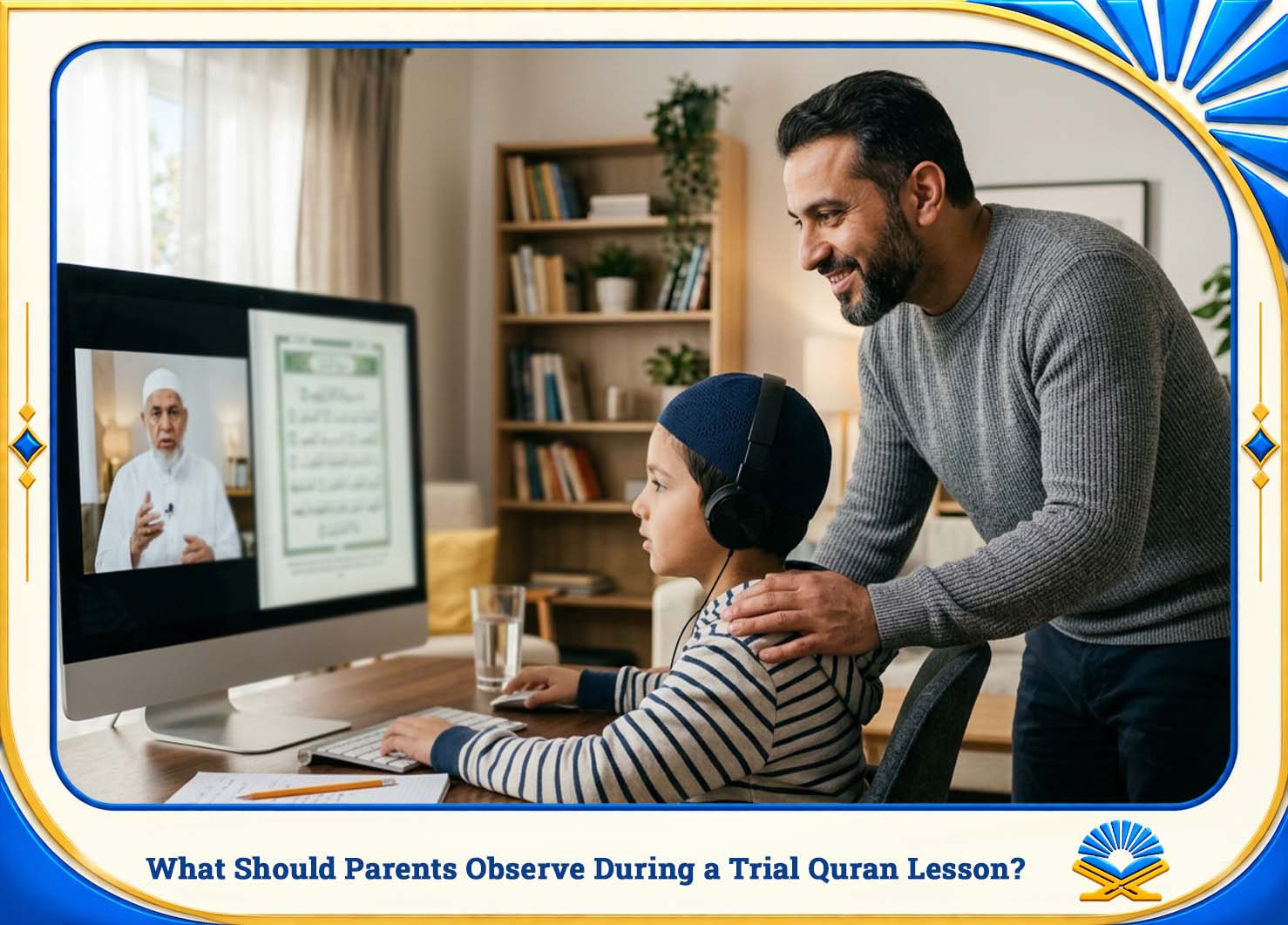
A trial lesson should give parents useful information about the child’s learning experience rather than simply serve as a sales presentation.
During the session, notice whether the teacher first identifies the child’s level, gives clear instructions, listens to the recitation, and corrects mistakes in a way the child can understand.
The child’s response also provides useful information. Does the learner feel comfortable asking questions? Can the child follow the teacher’s pace? Does the lesson appear too easy, too difficult, or reasonably challenging?
These observations can help families decide whether the teaching approach suits their child before committing to a regular schedule.
How Can Parents Recognize Their Child’s Progress?
Progress in Quran learning is not limited to the number of Surahs a child memorizes. A child may also make meaningful progress by improving pronunciation, reading with fewer pauses, applying Tajweed rules more accurately, remembering previously learned passages, or becoming more confident when reciting. Progress can be observed through indicators such as:
- Fewer repeated pronunciation errors
- Better Arabic letter recognition
- Smoother reading
- More accurate application of Tajweed
- Stronger retention during revision
- Greater independence during recitation
- Consistent completion of assigned practice
A useful progress system should make it possible to identify what the child has learned and what still needs attention.
How Can Technology Support Quran Learning?
Technology is useful when it supports teaching rather than replacing it. An online Quran platform can help organize lessons, manage schedules, communicate with teachers, and provide access to learning materials.
However, technology alone cannot correct a child’s recitation. The teacher remains essential because Quran learning depends heavily on listening and correction.
Families choosing online Quran lessons for kids should therefore look beyond the appearance of a platform. A sophisticated interface is less important than whether the learning process allows the teacher to hear the child clearly, correct errors, and follow progress over time.
Families interested in Arabic Quran education can also review Al Quran classes when considering the wider learning structure.
When Is Online Quran Learning a Practical Option?
For many families, online Quran classes for children can be practical when local access to Quran teachers is limited or when home-based learning fits the family’s schedule more effectively. Online learning may be particularly useful for families who:
- Have limited access to local Quran teachers
- Prefer learning from home
- Need scheduling flexibility
- Want individual attention for their child
- Have children with different Quran levels
- Need lessons that fit around school commitments
- Prefer a structured learning routine
Families in the United States who are comparing scheduling and learning options can also review online Quran classes USA as part of their research. Very young children may need additional help from a parent when using the technology. This does not necessarily prevent online learning, but families should consider how much support they can provide.
How Can Parents Explore Hamel El-Quran Academy?
For parents considering a structured online option, Hamel El-Quran Academy can be included in the research process. Before contacting the academy, parents can identify the child’s previous Quran experience and clarify whether the main objective is reading, Tajweed, memorization, revision, or a combination of these areas.
Sharing this information can help the provider understand the learner’s starting point and discuss an appropriate learning path. Families considering lessons can contact Hamel El-Quran Academy to discuss the child’s current level and learning goals before beginning a regular schedule.
A Practical Starting Plan for Your Child
If your child is new to online Quran learning, there is no need to begin with an ambitious target.
1. Identify the Current Level
Find out whether the child knows the Arabic alphabet, can connect letters, reads Quranic words, or already recites Surahs.
2. Define One Main Goal
Choose the most important initial objective. It might be learning to read, improving pronunciation, studying Tajweed, or beginning memorization.
3. Establish a Realistic Schedule
The schedule should fit the child’s school and family routine. A consistent routine is more practical than an ambitious timetable that is difficult to maintain.
4. Observe the Teaching Approach
During an introductory lesson, pay attention to how the teacher communicates with the child. Does the child understand the instructions? Does the teacher correct mistakes clearly? Is the pace appropriate?
5. Review Progress Regularly
After the program begins, parents should periodically check whether the child is improving and whether the learning goals remain appropriate. This process allows families to make decisions based on the child’s actual needs rather than marketing language.
Common Mistakes Parents Should Avoid
Choosing a Quran program only because it is inexpensive can create problems if the teaching approach does not suit the child. Another common mistake is expecting rapid memorization without allowing enough time for revision. A child may memorize new verses quickly but struggle to retain them without regular Muraja’ah.
Parents should also avoid comparing one child’s progress with another’s. Quran learning involves differences in reading ability, pronunciation, memory, confidence, and available practice time. Finally, more lesson hours do not automatically mean better learning. The quality of instruction, consistency, and suitability of the pace all matter.
How Can Quran Practice Become Part of a Child’s Routine?
The lesson itself is only one part of the learning process. Short, regular practice between classes can reinforce what the child has learned. For example, a family may set aside a consistent period for reviewing a small passage rather than expecting the child to complete a long practice session once a week.
The routine should remain manageable. If practice becomes a daily source of conflict, parents can discuss the workload with the teacher and adjust it when necessary. Over time, the objective is to help the child see Quran recitation as a normal part of the weekly routine rather than an occasional activity.
What Makes a Quran Class Truly Child-Friendly?
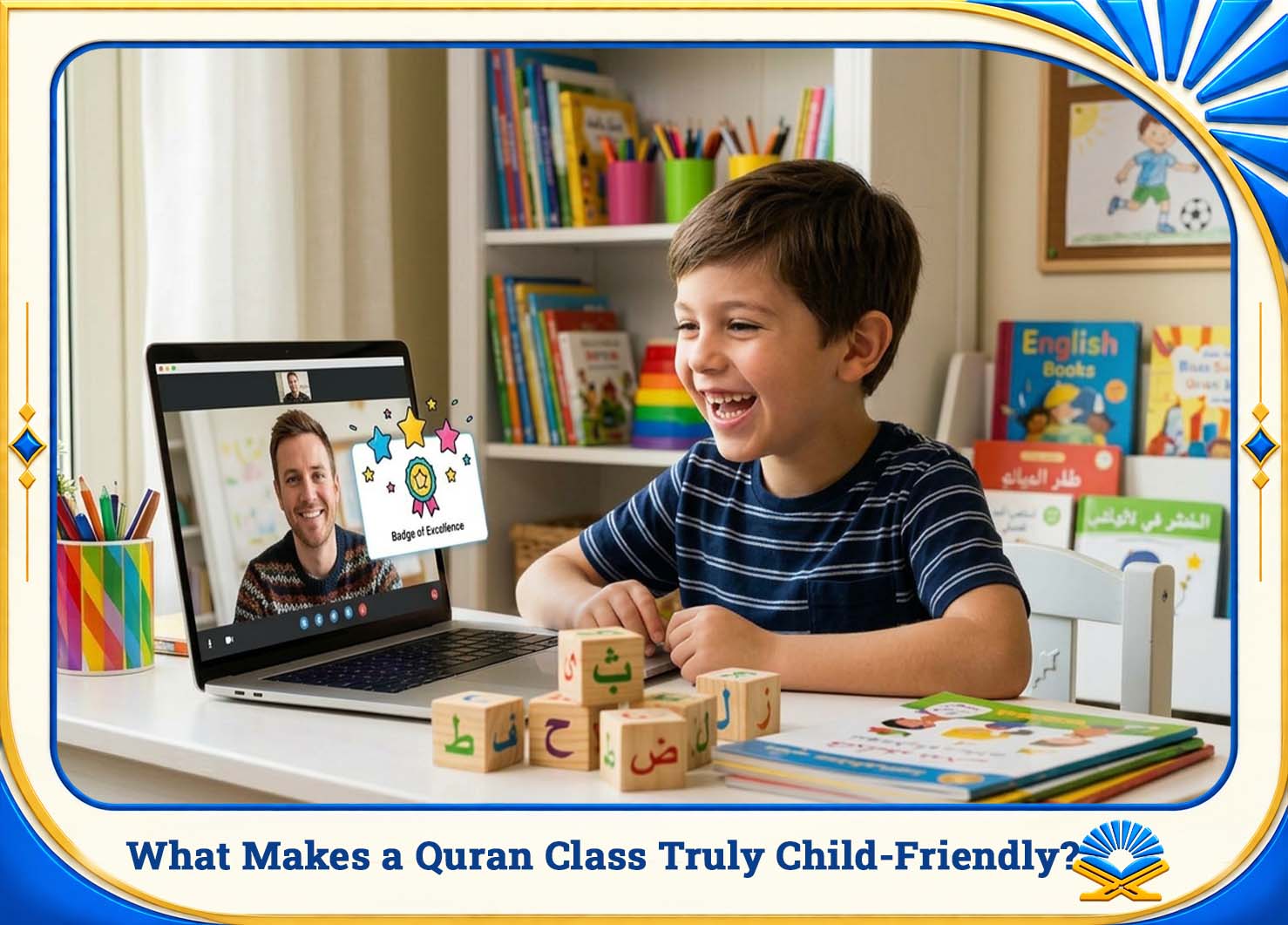
A child-friendly Quran class is not simply a lesson with games or colorful materials. It is a learning environment in which the child receives instruction at an appropriate level and has enough opportunities to practice and correct mistakes. A strong child-focused approach combines:
- Age-appropriate explanations
- Patient correction
- A manageable lesson pace
- Clear learning objectives
- Regular revision
- Positive communication
- Individual attention when needed
- Progress monitoring
- Respect for individual learning differences
These elements help children develop their Quran skills gradually through Online Quran Classes for Children without feeling overwhelmed.
Frequently Asked Questions: Online Quran Classes for Children
Find clear answers to common questions parents ask about starting age, lesson frequency, Tajweed, memorization, and choosing an online Quran program for their child.
1. What age can a child start learning the Quran online?
There is no single starting age that works for every child. Readiness depends on the child’s ability to concentrate, follow simple instructions, recognize basic Arabic letters, and participate comfortably in an online lesson. Very young children may need shorter activities and greater parental support.
2. How often should children attend Quran lessons?
The appropriate frequency depends on the child’s age, level, goals, and available practice time. A consistent schedule that the child can maintain is generally more practical than choosing a heavy schedule that becomes difficult to follow.
3. Should children memorize the Quran before learning Tajweed?
Children can begin memorization while developing their recitation skills, but they should also learn to pronounce Quranic words correctly. The teacher can introduce Tajweed progressively according to the child’s level rather than waiting until all memorization is complete.
4. What should parents do if a child does not enjoy Quran lessons?
First, identify the reason. The difficulty may come from the lesson pace, teaching style, level of challenge, tiredness, or lack of understanding. Parents can discuss the issue with the teacher and determine whether the schedule, activities, or learning approach should be adjusted.
In conclusion, choosing the right Online Quran Classes for Children is an important decision for parents who want their children to learn the Quran in a structured, supportive, and age-appropriate environment. The right program should consider the child’s reading level, attention span, learning pace, and personal goals. It should also provide clear explanations, regular practice, patient correction, and gradual progress in Quran reading, Tajweed, and memorization.
For parents, successful Quran learning is not only about attending lessons online. A positive learning experience also depends on choosing a qualified teacher, maintaining a consistent schedule, and creating a calm environment for practice at home. Parents can support their children by encouraging regular revision, celebrating progress, and communicating with the teacher when challenges appear.
Ultimately, Online Quran Classes for Children can make Quran learning more accessible and flexible while helping children develop stronger reading skills, confidence, and a meaningful connection with the Quran.