
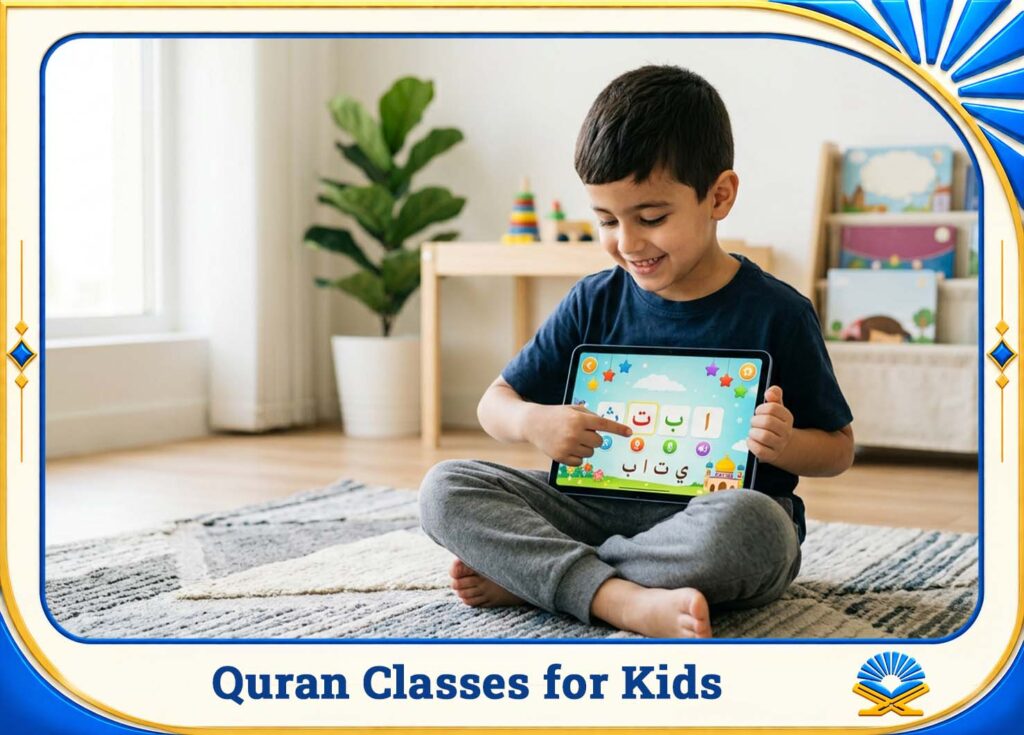
Quran classes for kids can give children a structured way to learn the Quran while allowing parents to fit lessons around school, family responsibilities, and everyday routines. For many parents, however, finding a suitable program involves more than choosing an available class.
They need to know whether the teacher can work effectively with children, whether lessons match the child’s level, how reading and Tajweed are taught, and how progress is monitored over time.
Hamel El-Quran Academy provides online Quran education designed to accommodate children’s different ages, abilities, and learning goals. Programs can focus on Quran reading, Tajweed, memorization, Arabic reading foundations, or a combination of these skills. This guide explains what parents should look for, how online learning works, and what a child can reasonably expect from a well-structured Quran program.
What Should Children Learn in Quran Classes?
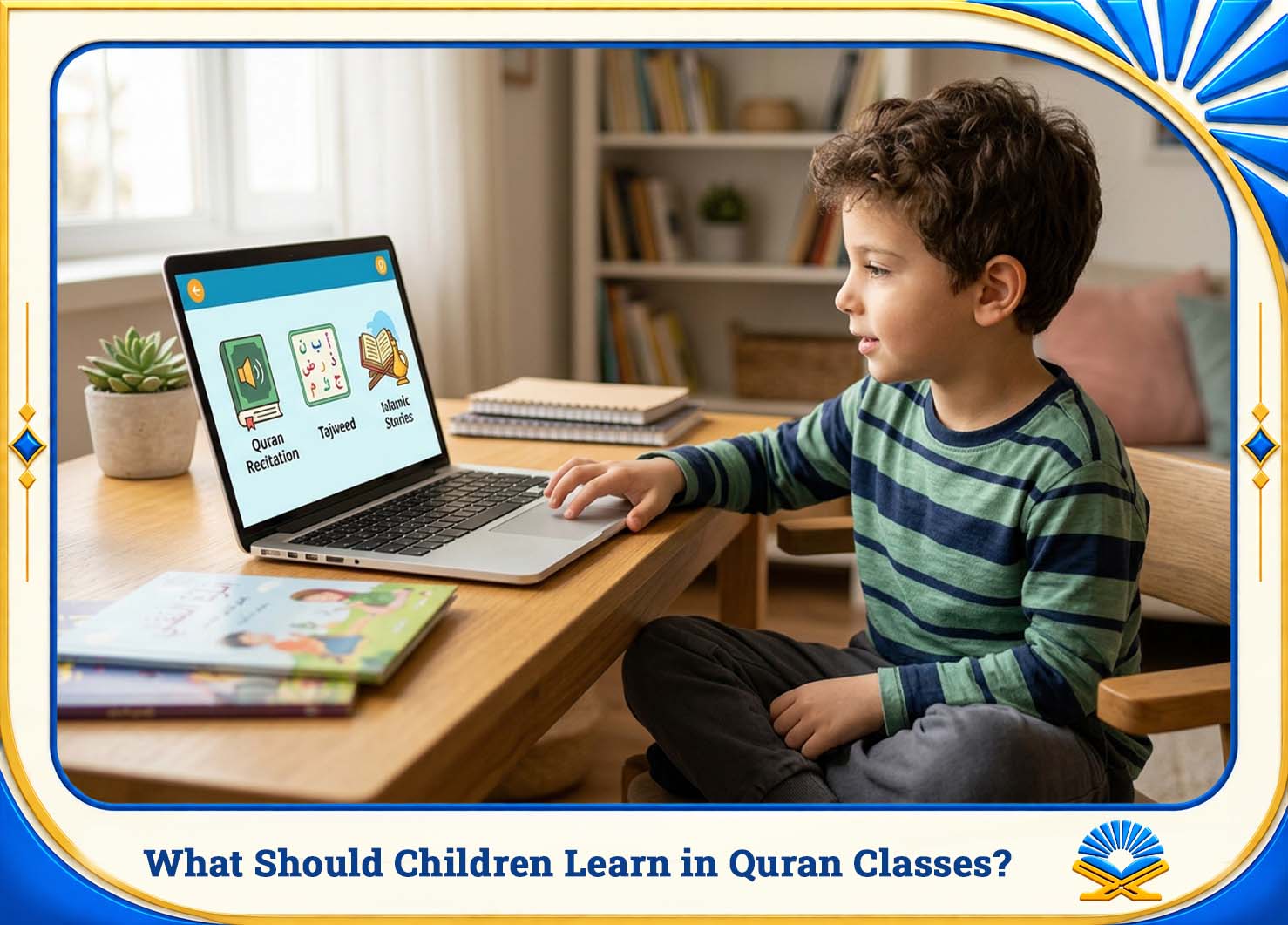
A child’s Quran education should develop more than the ability to repeat verses. At the beginning, many children need help recognizing Arabic letters, connecting them correctly, and developing accurate pronunciation. As their reading improves, they can gradually work on fluency, Tajweed, memorization, and understanding.
A suitable program should begin with the child’s current ability rather than assuming that every student needs the same curriculum. Starting at the right level can help children build confidence while avoiding lessons that are either too difficult or unnecessarily repetitive.
A well-structured approach to quran classes for kids can include several learning areas depending on the child’s age and level. Lessons may include:
- Arabic letter recognition and pronunciation
- Reading practice
- Makharij and basic pronunciation rules
- Tajweed principles
- Short Surah recitation
- Quran memorization
- Regular revision
- Basic Quranic vocabulary
- Islamic manners and values related to Quran learning
This progression helps prevent beginners from becoming overwhelmed while giving more advanced students room to develop their recitation and memorization skills.
Start Your Quran Learning Journey Today
Are you ready to learn the Quran with confidence and consistency? Hamel El-Quran Academy offers online Quran learning opportunities designed to help students improve their Quran reading, recitation, Tajweed, and memorization from home. With structured lessons and personalized guidance, you can develop your skills step by step according to your learning goals.
Join Hamel El-Quran Academy today and take the next step toward building a stronger and more meaningful connection with the Quran.

Why Online Quran Learning Can Work Well for Children?
Online learning can solve several practical problems for families. Parents do not need to arrange transportation to a physical classroom, and lessons can take place in a familiar home environment.
For children, staying at home can also reduce the disruption associated with traveling between activities. A consistent lesson time can become part of the child’s weekly routine, particularly when parents prepare a quiet place for learning.
Another advantage is individual attention. Private lessons allow the teacher to listen carefully to the child’s recitation, identify pronunciation problems, and adjust the pace when a particular concept requires more practice.
The quality of the experience still depends on the teaching approach. An online class should not simply reproduce a traditional lesson through a video call. Children need interaction, correction, repetition, and age-appropriate explanations.
When comparing quran classes for kids, parents should therefore look beyond the convenience of online learning and consider whether the teaching method actually supports the child’s development.
What Is an Online Quran Class for Kids Like?
An online quran class for kids should be structured around the child’s level and learning objective. A beginner may spend much of the lesson practicing letters and sounds, while a child who already reads Arabic may focus more heavily on Tajweed or memorization. A typical lesson may include:
- Reviewing material from the previous session.
- Listening to the child’s reading or memorization.
- Correcting pronunciation and recitation.
- Introducing a new section or skill.
- Practicing the new material together.
- Assigning manageable revision for the next lesson.
The exact structure can change according to the student’s age and progress. Younger children may benefit from shorter activities and frequent interaction, while older students may be ready for longer reading or memorization tasks.
Parents should ask how lessons are organized before enrolling. A clear teaching process makes it easier to understand what the child is learning and why.
What Are the Main Types of Quran Programs for Children?
Not every child needs the same type of Quran course. Some children are complete beginners, while others can already read Arabic but need to improve their Tajweed. Choosing the right starting point can make lessons more productive.
Quran Reading for Beginners
Children who are unfamiliar with Arabic letters usually need a strong reading foundation before moving quickly into Quran recitation. A foundation course can introduce:
- Arabic letters
- Letter shapes
- Correct pronunciation
- Combining letters
- Reading simple words
- Reading short Quranic passages
Noorani Qaida and Nour Al-Bayan-based learning can be useful for developing these foundational reading skills. The goal is to help the child recognize and pronounce Arabic accurately before expecting fluent Quran reading.
Tajweed and Recitation
Once a child can read basic Arabic, the focus can move toward accurate Quran recitation. Tajweed lessons introduce rules that help students pronounce Quranic words correctly and understand how different letters and sounds should be articulated.
Children do not necessarily need to learn every Tajweed rule at once. A gradual approach allows the teacher to introduce rules according to the student’s reading level.
Regular correction is particularly important because children can become accustomed to incorrect pronunciation if mistakes are not identified and corrected early.
Quran Memorization
Memorization requires a different learning routine from ordinary reading practice. Children need repetition, revision, and a realistic amount of new material.
A good memorization plan should consider the child’s age, school schedule, concentration level, and ability to retain previously learned passages.
The objective should not simply be to memorize more verses each week. Retaining what has already been memorized is equally important. A balanced routine combines new memorization with Muraja’ah, or revision of previous portions.
Arabic Reading Foundations
Some children need additional Arabic reading support before they can confidently approach the Quran. Building this foundation can make later recitation easier because the child becomes more familiar with Arabic letters, sounds, and word patterns.
Parents should therefore avoid comparing a beginner with a child who has already spent years reading Arabic. Progress should be measured against the student’s own starting level.
How Quran Classes Can Be Adapted to Different Ages?
Age can help parents and teachers understand what type of learning environment may suit a child, but it should not determine the entire program. Two children of the same age may have very different reading abilities, attention spans, and previous exposure to the Quran. Younger children generally benefit from:
- Short, focused activities
- Frequent repetition
- Simple explanations
- Positive encouragement
- Visual or interactive learning
- Clear and achievable goals
Older children may be ready for more independent reading, longer memorization sessions, detailed Tajweed instruction, and structured revision plans.
This is why parents should ask whether the teacher evaluates the child’s current level before deciding where lessons should begin. Age-appropriate kids quran classes should still be adjusted according to the individual learner rather than following exactly the same approach for every child.
How Can Quran Learning Differ by Age?
While the previous section focuses on how a program can be adapted to a child’s age and individual needs, parents should also understand how learning goals may develop as children grow.
For younger children, lessons may focus more heavily on Arabic letters, sounds, listening, pronunciation, and short Quranic passages. Shorter activities and frequent encouragement can help them remain engaged.
Children in the middle elementary years may be ready for more regular Quran reading, basic Tajweed, short Surah memorization, and structured revision. At this stage, teachers can gradually increase the amount of independent practice.
Older children and teenagers may be able to work with longer reading sessions, more detailed Tajweed rules, and larger memorization goals. They may also benefit from understanding why specific recitation rules are applied.
The most important consideration is still the child’s actual ability. An age-based approach can provide direction, while a level-based approach allows the teacher to adjust instruction when a child is ahead or needs additional support.
How to Choose a Quran Teacher for Your Child?

The teacher can have a major effect on how a child experiences Quran learning. Parents should look beyond qualifications and consider whether the teacher’s approach is appropriate for children.
When evaluating quran classes for kids, parents should pay attention to the teacher’s communication style, ability to correct mistakes, and willingness to adapt lessons to the child’s level.
Does the Teacher Correct Mistakes Clearly?
A child needs correction without feeling embarrassed or discouraged. The teacher should explain the mistake, model the correct pronunciation, and give the student enough opportunities to try again.
Can the Teacher Maintain a Child’s Attention?
Teaching children requires more than knowing the subject. Lessons need an appropriate pace and enough interaction to keep the student involved.
Does the Teacher Adapt to the Student’s Level?
A child who is struggling with Arabic letters should not be rushed into advanced Tajweed. Likewise, a child who already reads confidently should continue developing rather than repeating material indefinitely.
Is Communication Comfortable for the Child?
Depending on the family and student’s needs, parents may prefer a male or female teacher. Comfort can make it easier for a child to participate actively, ask questions, and accept correction.
Hamel El-Quran Academy offers male and female Quran tutors, allowing families to consider this preference when arranging lessons.
What Parents Should Expect From Online Quran Classes for Children
online quran classes for children should have a clear learning purpose. Parents should be able to understand what their child is currently studying, what needs improvement, and what the next learning objective will be.
Progress does not always mean completing a large amount of Quran. It can also appear through better pronunciation, fewer reading mistakes, greater confidence, improved fluency, or stronger retention. A useful progress system may track areas such as:
- Attendance
- Lesson completion
- Reading development
- Memorization
- Revision
- Teacher feedback
- Areas requiring additional practice
Hamel El-Quran Academy uses an LMS environment that supports lesson organization and progress tracking, giving parents a clearer view of their child’s learning journey. Regular practice can make online quran learning for kids more consistent and engaging.
How to Help Your Child Succeed With Quran Lessons?
The teacher cannot carry the entire learning process alone. A child’s home routine can make a significant difference, especially when memorization or reading practice is involved. Parents can support progress without turning Quran study into a source of pressure.
- Create a Consistent Routine
Choose a regular time when the child is normally alert. For many families, a lesson after school may work well, while others may prefer weekends or another part of the day. Consistency is more useful than creating an ambitious schedule that becomes difficult to maintain. - Give the Child a Quiet Learning Space
The child should have a suitable place for lessons with a stable internet connection, the necessary device, and as few distractions as possible. A simple setup can help the child understand that lesson time is different from ordinary screen time. - Encourage Revision Between Lessons
A few minutes of focused revision can reinforce what the child learned during the lesson. Parents do not need to become Quran teachers themselves. They can simply encourage the child to review assigned material and maintain the routine. - Focus on Progress Rather Than Comparison
Children develop at different speeds. Comparing one child’s memorization or reading ability with another child can create unnecessary pressure.
Instead, parents can look for gradual improvements in accuracy, confidence, consistency, and retention.
How Can Parents Create a Comfortable Online Quran Learning Environment?
A comfortable learning environment can make online Quran lessons easier for children, particularly when they are young or new to online education. Parents should choose a quiet area where the child can sit comfortably and focus without frequent interruptions.
The child should also feel comfortable communicating with the teacher. If a student is shy, distracted, or uncomfortable asking questions, parents can discuss the issue with the teacher and look for ways to make the lessons more engaging.
Parental involvement does not mean staying beside the child throughout every lesson. Instead, parents can help establish the routine, check that the required equipment works properly, and follow general feedback about progress.
It is also important to avoid turning every mistake into a serious issue. Quran learning requires patience and repetition. A supportive environment can help children view correction as a normal part of learning rather than something they should fear.
Common Mistakes Parents Should Avoid
Choosing a Quran program based only on price or the number of lessons can overlook factors that affect the child’s actual learning experience.
- Choosing a Program Without Checking the Child’s Level
A beginner and an experienced reader need different starting points. Parents should ask whether the program begins with an assessment or an introductory lesson. - Expecting Fast Memorization
Memorizing large portions quickly may sound impressive, but retention matters. A child who memorizes too much without adequate revision may struggle to maintain it. - Ignoring Pronunciation Problems
Small pronunciation issues can become habits when they are repeated over a long period. Regular correction is therefore an important part of Quran reading. - Making Every Lesson Feel Like a Test
Children need accountability, but constant pressure can reduce their enthusiasm. Encouragement and constructive feedback can make learning more sustainable. - Focusing Only on Completion
Finishing a certain number of Surahs does not tell the whole story. Parents should also consider reading accuracy, Tajweed, understanding, retention, and the child’s attitude toward learning.
How to Know if a Quran Program Is Working?
Parents do not need to wait months to evaluate whether a program is suitable. Several signs can help them assess the learning experience.
Parents evaluating quran classes for kids should look for steady improvement rather than expecting immediate results. A child may be making useful progress when they:
- Read with fewer repeated errors.
- Recognize Arabic letters and words more confidently.
- Apply previously learned Tajweed rules.
- Remember memorized passages during revision.
- Understand what they are expected to practice.
- Participate comfortably during lessons.
- Show increasing independence over time.
Progress should be viewed over a reasonable period rather than judged by one difficult lesson. Children can have good and bad learning days, especially when balancing Quran study with school and other responsibilities.
What Should Parents Ask Before Enrolling?

Before choosing a program, parents can ask a few practical questions. The answers can reveal whether the course is genuinely suitable for their child. Consider asking:
- How is my child’s current level determined?
- Who will teach my child?
- How are reading and Tajweed mistakes corrected?
- Is the program suitable for complete beginners?
- Can the schedule accommodate school and family commitments?
- How is memorization balanced with revision?
- How can parents follow their child’s progress?
- What happens if my child struggles with a particular lesson?
- Can I request a male or female teacher?
- What should my child have ready before the first lesson?
These questions shift the focus from promotional claims to the actual learning experience.
How Many Quran Classes Should a Child Take Each Week?
There is no single schedule that works for every child. The ideal number of weekly lessons depends on the child’s age, current Quran level, learning goals, school schedule, attention span, and ability to practice between lessons.
Younger children may benefit from shorter and more focused sessions, while older students may be able to manage longer lessons or additional weekly practice. More lessons do not automatically mean better results if the child becomes tired, loses concentration, or cannot review the material consistently.
Parents can review different online Quran class options based on these factors before selecting a suitable routine. A balanced schedule should give the child enough time to learn new material while also allowing regular revision and practice at home.
Parents should also consider the child’s school workload and other activities so Quran learning remains a positive and manageable part of the weekly routine. If the child is struggling to keep up, adjusting the frequency or lesson length may be more useful than simply adding more classes.
Online Quran for Kids: What Parents Need at Home
Online Quran learning requires a simple and reliable setup at home. Children should have access to a stable internet connection, a suitable device, working headphones if needed, and a quiet place where they can focus during the lesson.
The learning area does not need to be complicated, but it should be comfortable enough for the child to sit, listen, read, and interact with the teacher without frequent distractions.
Parents can prepare the device before class, check the camera and microphone, and help the child join the lesson on time. A predictable routine can also make it easier for children to stay focused and develop consistent study habits.
It is helpful to keep the Quran and any required learning materials nearby so the child does not need to leave the lesson repeatedly. Exploring online quran classes in the USA can also help parents understand how structured online programs organize lessons and support children’s Quran learning from home.
How Can One-to-One Learning Help?
One-to-one Quran learning can give children more direct attention from their teacher. Instead of following a fixed pace for a whole group, the lesson can focus on the child’s specific reading difficulties, pronunciation errors, memorization needs, or Tajweed skills. This can be especially useful when a child needs repeated practice with certain letters, words, verses, or recitation rules before moving to a new lesson.
This approach also gives the child more opportunities to ask questions, repeat difficult passages, and receive immediate correction. A teacher can adjust the pace when the child needs additional explanation and move forward when the child demonstrates confidence with the material.
Parents can explore al quran classes to understand how structured Quran learning can support individual needs while giving children consistent guidance and opportunities to improve their reading, recitation, and memorization skills.
What Should Parents Expect From a Child’s First Quran Class?
The first class can give both the parent and teacher useful information about the child’s current level. It does not necessarily need to be treated as a formal test.
The teacher may listen to the child’s Arabic reading, pronunciation, or memorization and identify areas that need attention. For a complete beginner, the first lesson may focus on basic letters and sounds rather than Quran recitation.
Parents can also use the first class to observe whether the child feels comfortable communicating with the teacher and whether the teaching style keeps the child engaged.
A useful introductory experience should help establish realistic goals and provide a starting point for the child’s learning plan. This can make the transition into regular lessons smoother.
When Should a Child Start Learning the Quran?
There is no single age that works for every child. Readiness can depend on attention span, familiarity with Arabic, communication skills, and the child’s willingness to participate.
Young children can begin with basic Arabic letters, listening, pronunciation, and short Surahs. Older beginners can start with the foundations they need without feeling that they are behind.
The important point is to choose an approach that matches the child’s developmental and educational level rather than setting an arbitrary target age.
What Makes a Good Quran Learning Experience for Children?
A useful program brings several elements together rather than relying on one feature. Parents should look for a combination of:
- Qualified and child-friendly teachers
- Appropriate lesson pacing
- Individual feedback
- Clear learning goals
- Regular revision
- Age-appropriate activities
- Progress monitoring
- Flexible scheduling
- A respectful Islamic learning environment
These factors work together. A highly qualified teacher may still struggle if the lesson pace is unsuitable, while a convenient schedule will not compensate for weak instruction.
Why Parents May Choose Quran Classes for Kids?
Parents may choose online Quran learning because it can make regular Quran study easier to fit around school, family responsibilities, and other activities. Children can learn from home while following a structured schedule with teacher guidance and regular practice.
When comparing programs, parents should look beyond the lesson format and consider teacher qualifications, communication, curriculum, flexibility, progress monitoring, and the type of support provided throughout the learning journey.
Reviewing the best online quran classes can help parents identify the factors that matter when choosing a suitable program for their child.
A Practical Starting Plan for Your Child
Parents who are unsure where to begin can keep the first stage simple. Start by identifying whether your child:
- Cannot yet recognize Arabic letters.
- Recognizes letters but struggles to read words.
- Reads Arabic but needs better Quran pronunciation.
- Reads confidently and wants to improve Tajweed.
- Wants to begin or continue Quran memorization.
Then consider the child’s schedule and how much practice can realistically be maintained at home. Once these points are clear, it becomes easier to choose the appropriate program instead of selecting a course based only on its name.
For families looking for quran lessons for kids, Hamel El-Quran Academy offers Quran learning options covering reading, Tajweed, memorization, and Arabic reading foundations. Parents can explore the available programs and determine which option corresponds most closely to their child’s current needs.
What Should Parents Consider Before Choosing Quran Classes for Kids?
Parents should look beyond the number of lessons included in a package. The more important question is whether the program provides a learning structure that matches the child’s needs.
Before making a decision, parents can consider lesson frequency, teacher availability, scheduling flexibility, progress monitoring, and the amount of revision expected between classes.
It is also useful to understand what happens if the child’s needs change. For example, a student may initially need reading support and later move toward Tajweed or memorization. A flexible learning approach can make this transition easier.
Rather than choosing a package based on one feature, parents should consider whether the overall program can provide consistent instruction and support the child’s progress over time.
How to Start Quran Classes for Your Child?

Starting does not need to be complicated. The first step is to identify your child’s level and learning goal. From there, parents can discuss the suitable program and schedule with the academy.
Hamel El-Quran Academy provides a free trial class, allowing parents and children to experience the learning environment before making a longer-term decision. A practical process is:
- Register for the trial class.
- Discuss the child’s current level and learning needs.
- Attend the introductory lesson.
- Choose the appropriate learning path.
- Establish a realistic weekly routine.
- Follow progress and adjust the approach when necessary.
This approach gives parents useful information about quran classes for kids before committing to a regular schedule.
Frequently Asked Questions: Quran Classes for Kids
Below are some of the most common questions parents ask when choosing Quran classes for kids and starting their child’s Quran learning journey.
How long should a child’s Quran lesson be?
The appropriate lesson length depends on the child’s age, concentration, level, and learning goals. Younger children may benefit from shorter focused sessions, while older students can often manage longer lessons.
Should children learn reading before memorizing the Quran?
A child should have enough reading ability to pronounce the Quran correctly before relying heavily on memorization. Building a strong reading foundation can make later memorization more accurate and sustainable.
Can a child learn Quran online without knowing Arabic?
Yes. Beginners can start with Arabic letters, pronunciation, and reading foundations before progressing to Quran recitation. The program should match the child’s starting level rather than assuming previous Arabic knowledge.
How can parents tell whether a child is ready for Quran memorization?
A child may be ready when they can read the relevant Quranic text with reasonable accuracy, participate consistently in lessons, and retain short passages through revision. The teacher can also help determine whether memorization should begin or whether more reading practice is needed.
In conclusion, quran classes for kids should be chosen according to the child’s actual learning needs, not simply the number of lessons or the promises used in an advertisement. Parents should consider the teacher, curriculum, lesson structure, level of personalization, revision process, scheduling, and methods used to monitor progress.
For families considering quran classes for kids online, the most useful next step is to identify the child’s current level and learning goal. A suitable program can then build the necessary skills gradually, whether the priority is reading, Tajweed, memorization, or a stronger Arabic foundation.
Hamel El-Quran Academy offers structured Quran learning for children with options designed around different abilities and goals. Parents can start with a trial class to understand the teaching approach and discuss the most suitable path for their child.
Ready to begin? Explore the available Quran programs and arrange a trial class to take the next practical step in your child’s Quran learning journey.