

Online Quran Classes USA offers students across the United States a flexible way to study the Quran from home with live teacher guidance. Instead of traveling to a mosque, school, or physical learning center, learners can attend lessons through an internet-connected computer, tablet, or smartphone.
The right learning path depends on the student’s current Quran reading ability, age, goals, and available time. A complete beginner may need to start with Arabic letters, pronunciation, and Noorani Qaida, while an experienced reader may need focused instruction in Tajweed, memorization, fluency, or Muraja’ah.
Online Quran learning can also accommodate different lifestyles. Children may need age-appropriate lessons and a patient teaching approach, while adults may need class times that fit around work, university, and family responsibilities.
Hamel El-Quran Academy provides an online option for students who want to study the Quran from home. Understanding how these lessons work, what students can learn, and how to choose an appropriate course can help learners begin with realistic expectations.
This guide explains the main aspects of online Quran study in the USA, including course types, student levels, lesson structure, teacher selection, scheduling, progress tracking, common mistakes, and practical ways to build a consistent study routine.
Understanding Online Quran Learning in the USA

Online Quran learning connects students with a Quran teacher through live internet-based lessons. The student and teacher can communicate during the session, allowing the learner to read, recite, ask questions, practice, and receive direct feedback.
The learning content does not have to be identical for every student. A person who has never learned to read Arabic may begin with letters, sounds, vowel marks, and basic reading patterns.
Another learner may already read the Quran but need help correcting pronunciation, applying Tajweed rules, improving fluency, or retaining memorized passages. Depending on the student’s objectives, lessons may include:
- Quran reading and pronunciation
- Noorani Qaida
- Tajweed rules and practical recitation
- Makharij and Arabic letter characteristics
- Quran memorization
- Muraja’ah and memorization revision
- Quranic Arabic
- Selected Islamic studies
The learning path can also change as the student progresses. Someone may begin with basic reading, move into Tajweed, and later focus on memorization. This makes assessment and regular communication with the teacher important throughout the learning process.
Start Your Quran Learning Journey Today
Are you ready to learn the Quran with confidence and consistency? Hamel El-Quran Academy offers online Quran learning opportunities designed to help students improve their Quran reading, recitation, Tajweed, and memorization from home. With structured lessons and personalized guidance, you can develop your skills step by step according to your learning goals.
Join Hamel El-Quran Academy today and take the next step toward building a stronger and more meaningful connection with the Quran.

Who Can Study the Quran Online?
Online Quran lessons can accommodate learners of different ages, experience levels, and objectives. What matters most is starting at a level that reflects the student’s actual ability.
Complete Beginners
A complete beginner may need to develop basic Arabic reading skills before working through longer Quranic passages.
Early lessons can introduce Arabic letters, correct sounds, vowel marks, simple combinations, and gradual reading practice. Noorani Qaida can provide a structured foundation before the learner begins reading more complex Quranic words and verses.
The goal at this stage is not to rush through material. Building accurate reading habits can make later Tajweed and Quran reading practice easier.
Adults
Adults can begin Quran study even if they have limited Arabic reading experience. Their lessons can start with basic reading and gradually move toward pronunciation, fluency, Tajweed, memorization, or another specific goal.
Scheduling is particularly important for adult learners. A practical timetable should fit around employment, university, family responsibilities, and other commitments. A manageable routine is often easier to maintain than an intensive schedule that becomes difficult to follow after a few weeks.
Children
Children can benefit from online Quran learning when lessons are adapted to their age and attention span. Young learners may respond well to short activities, repetition, guided reading, and immediate correction.
Parents can also consider the teacher’s communication style and ability to explain Quran reading concepts in a way the child can understand. The objective should be to create a structured learning environment without making every lesson feel overwhelming.
Students With Previous Quran Knowledge
Students who already read the Quran may not need introductory lessons. An initial assessment can help identify specific areas that require attention.
For example, a learner may read fluently but repeatedly mispronounce certain Arabic letters. Another student may read accurately but need help applying Tajweed rules during recitation. Someone who has memorized several Surahs may primarily need a stronger Muraja’ah routine.
Starting from the actual level prevents unnecessary repetition and allows lesson time to focus on meaningful improvement.
What Can Students Learn in Online Quran Classes?
The content of an online Quran program depends on the student’s starting level and learning objective. Different courses may focus on reading, recitation, memorization, Arabic, or a combination of these areas.
Quran Reading and Pronunciation
Quran reading lessons help students develop the ability to recognize Arabic letters, read words accurately, and gradually improve fluency.
Beginners may work on letters and vowel marks before progressing to words and verses. More experienced learners can use reading practice to address recurring pronunciation problems and improve their confidence when reading complete passages.
Correct pronunciation is especially important because repeated mistakes can become difficult to change when they are not identified early.
Noorani Qaida
Noorani Qaida can introduce learners to the foundations of Arabic reading through a structured progression. Depending on the learner’s level, lessons may cover letters, vowel marks, combinations, and increasingly complex reading patterns. This approach can help beginners develop the skills they need before moving into more extensive Quran reading.
Tajweed
Tajweed focuses on applying the rules of Quranic recitation during actual reading. Depending on the student’s level, instruction may include:
- Makharij
- Characteristics of Arabic letters
- Noon Sakinah and Tanween
- Meem Sakinah
- Qalqalah
- Madd
- Ghunnah
- Rules of stopping and starting
For example, students can study the rules of Meem Sakinah and then practice applying them while reciting. Learning a rule theoretically is only one part of Tajweed. Students also need repeated practice and direct correction so they can recognize and apply the rule during recitation.
Quran Memorization
Quran memorization requires both new learning and regular revision. A structured Hifz plan can divide study time between newly memorized passages and previously learned material. This helps students continue progressing while giving older portions regular attention.
The pace should reflect the student’s available time and ability to retain previous memorization rather than focusing only on the amount of new material completed.
Muraja’ah
Muraja’ah is the process of reviewing previously memorized Quran passages. Regular revision is important because memorization can become weaker when older portions are not revisited. A student may therefore need a plan that balances new memorization with review. The amount of revision can change as the memorized portion becomes larger.
Quranic Arabic
Some learners want to understand the language of the Quran in addition to improving their reading and recitation. Quranic Arabic lessons may introduce frequently used vocabulary and language patterns. This can help students recognize familiar words and develop a stronger understanding of the text they encounter during Quran study.
How Do Online Quran Classes USA Work?
A structured online Quran program generally begins by identifying the learner’s current ability and defining a practical learning objective. The process can follow several stages.
1. Assess the Student’s Level
The teacher evaluates the learner’s reading, pronunciation, fluency, Tajweed knowledge, or memorization, depending on the intended course. A beginner may demonstrate knowledge of Arabic letters and vowel marks, while an experienced student may read selected Quranic passages for evaluation.
2. Define the Learning Goal
The student and teacher can establish the main objective. This might be:
- Learning Quran reading from the beginning
- Improving pronunciation
- Studying Tajweed
- Increasing reading fluency
- Memorizing new Surahs
- Reviewing previous memorization
- Studying Quranic Arabic
Having a clear objective makes it easier to determine what should happen during each lesson.
3. Follow an Appropriate Learning Path
Lesson content should reflect the student’s level rather than forcing every learner through the same sequence. A beginner may need foundational reading instruction, while an experienced reader may benefit more from targeted Tajweed correction.
4. Attend Live Lessons
During the lesson, the student can read, recite, listen, ask questions, and practice while the teacher provides direct feedback. This interaction is one of the main differences between live online learning and studying only from recorded materials.
5. Practice Between Lessons
Independent practice reinforces what the teacher covered during the session. A student may need to repeat difficult sounds, practice particular Tajweed rules, revise memorized verses, or read assigned passages before the next class.
6. Review Progress
The teacher can monitor recurring mistakes and adjust the learning plan as the student’s ability develops. This makes the process more flexible than following a fixed sequence without considering the learner’s progress.
What Happens During a Typical Online Quran Lesson?
A typical lesson can vary according to the student’s age, level, and objective, but a structured session often contains several basic elements. The lesson may begin with a short review of material from the previous class. This allows the teacher to identify whether the student has retained the material and whether any mistakes continue to appear.
The teacher can then introduce new material. This might involve a reading skill, Tajweed rule, memorization portion, or Quranic Arabic topic. During practical work, the student reads or recites while the teacher listens carefully. When a pronunciation problem occurs, the teacher can identify the specific sound and explain how to correct it.
The lesson may end with practice instructions for the period before the next class. Giving the student a clear task can make independent study more organized. The exact lesson structure should therefore depend on what the learner is trying to achieve rather than following one identical format for everyone.
What Happens During the First Quran Lesson?

The first lesson is usually more about understanding the learner’s starting point than covering a large amount of new material. A beginner may be asked to identify Arabic letters, read simple combinations, or demonstrate familiarity with vowel marks. A student with previous Quran experience may read selected verses so the teacher can assess pronunciation, fluency, and Tajweed.
For example, a learner might read fluently but repeatedly struggle with particular Arabic sounds. In that case, targeted pronunciation practice may be more useful than returning to material the student already understands.
Another learner may have memorized several Surahs but struggle to retain them. That student may need a stronger Muraja’ah system instead of immediately adding more new material. The first lesson should therefore help establish a realistic starting point and a clear direction for future study.
How to Choose the Right Online Quran Course?
Before selecting a course, determine what you actually want to accomplish. Ask yourself:
- Do I need to learn Quran reading from the beginning?
- Can I read but make repeated pronunciation mistakes?
- Do I want systematic Tajweed instruction?
- Am I planning to memorize the Quran?
- Do I need help reviewing previously memorized Surahs?
- Am I choosing a course for myself or my child?
- How much time can I realistically study each week?
Once these questions are answered, compare your needs with the course structure. Useful features can include:
- A suitable starting level
- Live teacher interaction
- Individual correction
- Clear learning objectives
- Practice guidance
- Regular revision
- Progress assessment
- A manageable schedule
A program does not become suitable simply because it offers many features. The important question is whether its teaching method, pace, content, and schedule match the student’s actual situation.
How to Choose an Online Quran Teacher?
The teacher has an important role in Quran reading and Tajweed because learners need accurate listening and clear correction. When evaluating a teacher, consider whether the instructor can:
- Adjust explanations to the student’s level
- Identify pronunciation problems
- Explain corrections clearly
- Give the learner sufficient reading time
- Identify repeated mistakes
- Explain unfamiliar Tajweed rules
- Encourage regular practice
- Adjust the lesson plan when the student’s needs change
- Communication also matters.
A teacher may have strong subject knowledge, but students still need explanations they can understand and enough opportunities to ask questions and practice.
For children, parents should additionally consider whether the teacher can maintain the child’s attention and communicate in an age-appropriate way.
What Should Parents Consider When Choosing Quran Classes for Children?
Parents should look beyond the course title when selecting Quran lessons for a child. The child’s age, reading ability, attention span, and learning objective should all influence the choice. Parents can consider:
- The teacher’s communication style
- How much time the child spends actively reading
- Whether lessons suit the child’s age
- How pronunciation mistakes are corrected
- Whether practice instructions are provided
- How progress is communicated to parents
- Whether the schedule fits the family routine
A child who is still learning Arabic letters may need a different approach from a child who already reads the Quran and wants to improve Tajweed. Consistency is also important. A class schedule that the child can follow regularly is generally easier to maintain over time.
How to Schedule Quran Classes in the USA?
Students in the United States live across different time zones, including Eastern, Central, Mountain, and Pacific Time. For that reason, learners should confirm the exact local time of each class rather than relying only on the teacher’s stated time. Before establishing a regular schedule, consider:
- The student’s local time zone
- School or university hours
- Employment commitments
- Family responsibilities
- Fixed or flexible lesson days
- The process for requesting schedule changes
- The number of lessons the student can realistically maintain
A sustainable timetable is often more useful than an intensive schedule that becomes difficult to follow.
Are Online Quran Classes Effective?
The online format itself does not determine whether a student will make progress. The learning experience depends on several factors, including the quality of instruction, accuracy of feedback, student participation, lesson structure, consistency, and practice between sessions.
For example, attending lessons regularly without practicing between classes may slow progress. Similarly, reading repeatedly without receiving correction can allow the same pronunciation problem to continue.
Students should therefore consider the complete learning process rather than focusing only on whether the class takes place online. Active participation, regular practice, appropriate lesson difficulty, and ongoing feedback can all contribute to a more productive learning experience.
How to Measure Quran Learning Progress?
Progress should be connected to the student’s actual objective. A learner can consider indicators such as:
- More accurate Quran reading
- Better pronunciation
- Improved Tajweed application
- Greater reading fluency
- Increased memorization
- Better retention of previous memorization
- Fewer repeated mistakes
- Greater confidence while reading
A beginner may measure progress by moving from individual letters to words and then to complete verses. A Tajweed student may focus on correcting particular pronunciation patterns and applying recitation rules more consistently.
For a Hifz student, progress involves both new memorization and the ability to retain previously learned passages. This makes personal learning goals more useful than measuring progress only by the number of pages completed.
How Can Hamel El-Quran Academy Support Quran Learners?
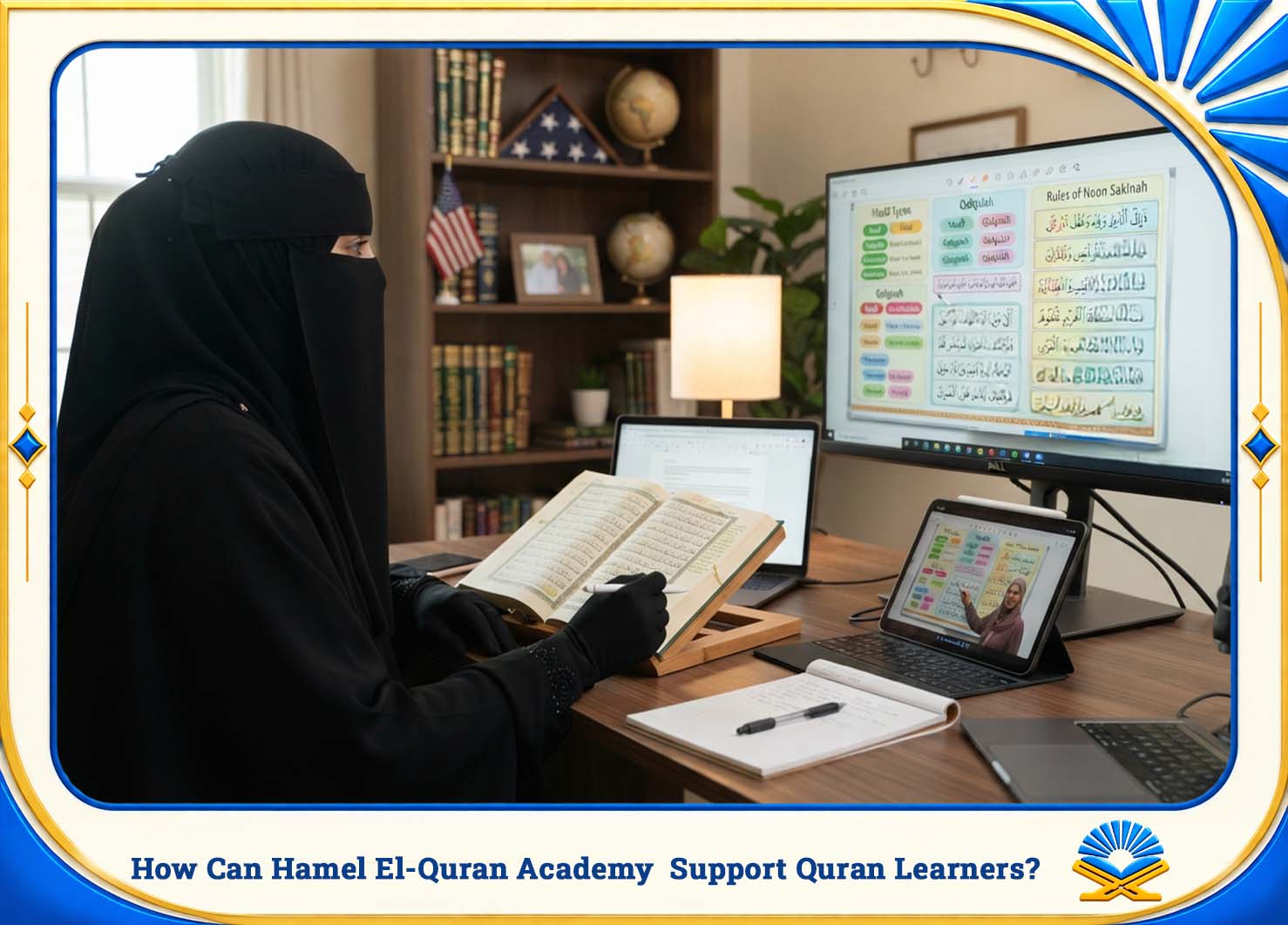
For students searching for al-Quran classes, Hamel El-Quran Academy provides an online option for learners who want to study the Quran from home. The appropriate learning path depends on the student’s current level and objective. A beginner may need foundational reading instruction, while another student may want to focus on Tajweed, pronunciation, memorization, or revision.
Before starting, students can consider questions about available courses, teacher options, schedules, and the most appropriate starting point for their level. Having these details clear can help learners understand what the program involves and whether the learning approach matches their needs.
How to Build a Consistent Quran Study Routine?
- Attend lessons on consistent days.
- Review the previous lesson before the next session.
- Practice difficult words, sounds, or verses separately.
- Keep track of recurring pronunciation mistakes.
- Review memorized passages regularly.
- Ask the teacher about unclear points.
- Adjust the routine when the learning objective changes.
A beginner may spend more time developing basic reading skills. A Tajweed learner may need repeated practice with difficult sounds and rules. A Hifz student can divide practice between new memorization and Muraja’ah. The most useful routine is not necessarily the longest one. It is the routine that the learner can maintain alongside other responsibilities.
Common Mistakes When Choosing Online Quran Classes in the USA
Selecting a Quran program becomes easier when students understand common problems that can affect their learning experience.
- Choosing Only by Price: Price alone does not show whether a course fits the student’s needs. Consider the teaching approach, lesson structure, teacher interaction, correction, scheduling, and learning objectives before making a decision.
- Choosing the Wrong Level: A beginner may struggle if lessons move too quickly. An experienced reader may face the opposite problem if the course spends too much time on material they have already mastered. An appropriate starting assessment can help prevent both situations.
- Ignoring Teacher Feedback: Pronunciation problems can continue when students do not understand what they are doing incorrectly. Learners should ask questions when a correction is unclear and practice the specific sound, word, or verse identified by the teacher.
- Creating an Unrealistic Schedule: An intensive schedule can appear productive at first but become difficult to maintain. A manageable routine that fits work, school, family responsibilities, and other commitments may provide a more sustainable approach.
- Memorizing Without Regular Revision: Learning new verses without reviewing older material can make retention more difficult. Students working on Hifz should give regular attention to Muraja’ah rather than measuring progress only by new memorization.
- Choosing Based Only on Advertising: Promotional descriptions cannot determine whether a particular program fits an individual learner.
Questions about level assessment, teacher interaction, correction, scheduling, practice, and progress monitoring can provide more useful information. Parents can introduce children to Quran study through quran classes for kids designed around their learning needs.
What Should You Ask Before Joining an Online Quran Program?
Before enrolling, students can prepare a short list of practical questions. Consider asking:
- How will my current Quran reading level be assessed?
- What happens if I need additional beginner-level practice?
- How are pronunciation and Tajweed mistakes corrected?
- How is student progress monitored?
- What practice is expected between lessons?
- Can the learning plan change as my skills develop?
- How are schedule changes handled?
- How much individual attention does each student receive?
- What does a typical lesson include?
The answers can help learners compare programs according to their actual needs instead of relying only on general promotional claims. Learners can explore the best online quran classes when choosing a suitable learning format.
Why Study the Quran From Home?
Studying the Quran from home can reduce the need to travel to a physical learning center for every lesson. For many students, this can make Quran study easier to organize around school, university, employment, and family responsibilities.
Online learning can also provide an option for people who have difficulty finding a suitable local learning environment. Regular practice can make online quran learning for kids more consistent and engaging.
The value of studying from home is not limited to convenience. When lessons are structured properly, students can still communicate directly with a teacher, receive corrections, practice during the session, and follow a learning plan based on their goals. Families can support children’s Quran education with online quran classes for children from home.
A Simple Guide to Choosing Your Quran Learning Path
The appropriate learning focus depends on what the student can currently do and what they want to achieve.
| Student Situation | Suitable Learning Focus |
|---|---|
| Complete beginner | Arabic letters, basic reading, and Noorani Qaida |
| Can read but makes frequent mistakes | Pronunciation correction and Tajweed |
| Wants to improve recitation | Tajweed application and guided reading |
| Wants to memorize the Quran | Hifz with structured revision |
| Has memorized before but forgets passages | Muraja’ah and retention practice |
| Busy adult learner | A realistic recurring schedule |
| Needs focused correction | Individual lessons with direct feedback |
| Prefers learning with others | An appropriate small-group format |
This table is a starting point rather than a fixed formula. An assessment may show that a learner needs a combination of skills or a different pace. The learning path can also change as the student’s abilities develop.
How to Start Online Quran Classes With Hamel El-Quran Academy?

- Identify Your Current Level: Determine whether you are a complete beginner, an experienced reader, or a student who primarily needs Tajweed, memorization, or revision.
- Define Your Main Goal: Decide what you want to achieve from the lessons. Your goal might be learning to read the Quran, improving recitation, studying Tajweed, memorizing Surahs, or maintaining previous memorization.
- Ask About Suitable Courses: Discuss the available learning options and ask which course matches your current level and objective.
- Confirm the Schedule: Choose lesson times that fit your local time zone and daily responsibilities.
- Explain Your Learning Needs: Tell the teacher about any specific difficulties, such as pronunciation problems, reading challenges, previous memorization, or limited study time.
- Begin and Practice Consistently: Once the learning path is established, attend lessons regularly and follow the practice guidance between sessions.
Students interested in online Quran classes can use this process to begin with a clearer objective and a more practical study routine.
Frequently Asked Questions About Online Quran Classes USA
Are Online Quran Classes USA suitable for complete beginners?
Yes. Beginners can start with foundational skills such as Arabic letters, pronunciation, vowel marks, and Noorani Qaida. The appropriate starting point depends on the student’s existing knowledge and learning objective.
Can adults learn the Quran online without previous Arabic knowledge?
Yes. Adults can begin with basic Quran reading and gradually develop pronunciation, fluency, Tajweed, or memorization skills according to their goals and available study time.
How often should I attend online Quran classes?
The appropriate frequency depends on the student’s level, objective, schedule, and ability to practice between lessons. A consistent timetable that can be maintained over time is generally more practical than a demanding routine that is difficult to sustain.
What should I do if I am not improving?
First, identify the specific area causing difficulty and discuss it with the teacher. The solution may involve additional pronunciation practice, more revision, a slower pace, or an adjustment to the learning plan.
In conclusion, Online Quran Classes USA give students across the United States an option for studying Quran reading, Tajweed, memorization, and related subjects from home.
The most important starting point is understanding the learner’s current ability and defining a realistic goal. Beginners may need a strong foundation in Arabic reading, experienced readers may benefit from focused Tajweed correction, and students working on Hifz need a balanced approach to new memorization and Muraja’ah.
The quality of the learning experience also depends on teacher interaction, lesson structure, feedback, scheduling, and practice between classes. Choosing a course based on these factors can help students avoid unsuitable programs and build a study routine they can maintain.
Hamel El-Quran Academy provides an online learning option for students who want to begin or continue their Quran studies from home. Students can explore available courses, discuss their learning goals, and determine an appropriate starting point based on their level and schedule.