

Online Quran classes for beginners provide a practical starting point for anyone who wants to learn Quran reading without previous experience. A complete beginner may know a few Arabic letters but struggle to connect them, pronounce unfamiliar sounds, or understand where Tajweed fits into the learning process. With the right structure, these difficulties can be handled one step at a time.
At Hamel El-Quran Academy, beginners can follow a structured approach that focuses on building essential Quran reading skills gradually. Learning from home can also make regular study easier for children and adults who have school, work, or family responsibilities. Instead of trying to work through Quran reading alone, the learner can receive direct guidance, practice aloud, and get corrections during the lesson.
This guide explains what beginners should learn first, how lessons usually work, how to choose an appropriate learning path, what mistakes to avoid, and how to recognize genuine progress.
What Are Online Quran Classes for Beginners?
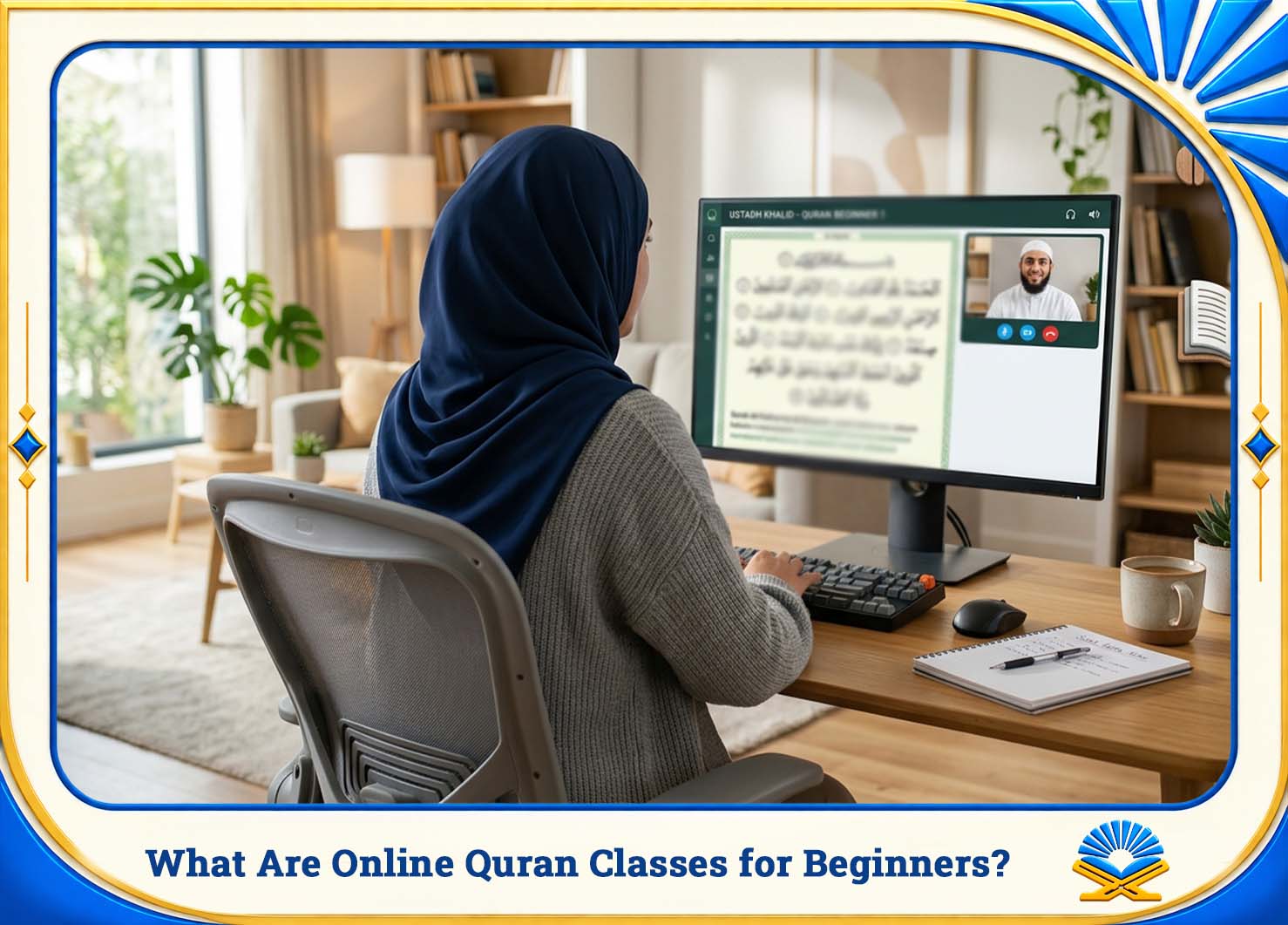
Online Quran classes for beginners are lessons designed for students who are new to Quran reading or need to rebuild basic reading skills. Each learner may start from a different point. One student may need to learn the Arabic alphabet, while another may recognize the letters but struggle with pronunciation or connected reading. A beginner-focused program may cover:
- Arabic letters and their different forms
- Letter pronunciation
- How Arabic letters connect
- Basic vowel sounds and reading marks
- Simple Quranic words
- Pronunciation correction
- Foundational Tajweed
- Guided Quran reading
- Gradual memorization when appropriate
The learning process should follow a clear progression. Beginners need to develop basic reading skills before they move toward more advanced recitation. A suitable program can introduce each skill gradually and give students enough practice before they advance to the next stage.
What Should a Beginner Learn First?
The first goal should be accurate reading rather than memorizing a large amount of Quran. A student who is completely new to Arabic may begin by recognizing letters and learning their sounds.
Once those skills become familiar, the next stage can involve connecting letters and reading short combinations. From there, the learner can gradually work with Quranic words and simple passages.
Pronunciation deserves attention from the beginning. Some Arabic sounds may be unfamiliar, particularly for students whose first language does not contain similar sounds. Correcting these issues early can prevent them from becoming established reading habits.
Tajweed can then be introduced gradually. Beginners do not need to memorize a long list of technical definitions before they start reading. They need to understand the relevant rule, hear how it works, and practice it during recitation.
Start Your Quran Learning Journey Today
Are you ready to learn the Quran with confidence and consistency? Hamel El-Quran Academy offers online Quran learning opportunities designed to help students improve their Quran reading, recitation, Tajweed, and memorization from home. With structured lessons and personalized guidance, you can develop your skills step by step according to your learning goals.
Join Hamel El-Quran Academy today and take the next step toward building a stronger and more meaningful connection with the Quran.

How Do Online Quran Lessons Work?
A typical lesson takes place through an internet-connected device, allowing the student and teacher to communicate directly. The learner reads aloud while the teacher listens, explains difficult points, and corrects errors.
For a beginner, this immediate feedback can make practice more productive. A student may think two sounds are identical when they are not, or may understand a rule in theory but apply it incorrectly while reading. The teacher can identify the problem when it occurs and guide the learner through the correction.
A first lesson can also help determine where the student should begin. Instead of giving every new learner the same material, the teacher can identify existing skills and areas that need more attention.
This approach keeps the learning process focused and reduces time spent on material the student already understands.
What Do Online Quran Classes for Beginners Usually Cover?
A beginner program normally develops several connected skills rather than treating Quran reading as one large subject.
- Arabic Letter Recognition: Students first need to distinguish between Arabic letters and become familiar with their shapes and sounds. Repeated exposure helps make recognition faster and more natural.
- Connecting Letters: Knowing individual letters does not automatically mean a learner can read words. Beginners need practice seeing how letters change or connect when they appear together.
- Vowels and Reading Marks: Short vowel sounds and other common reading marks help students understand how written Arabic should be pronounced. Practice at this stage prepares the learner for actual Quranic reading.
- Pronunciation: The teacher can listen carefully to the learner’s recitation and identify sounds that need correction. Repetition then helps the student develop more reliable pronunciation.
- Basic Tajweed: Foundational Tajweed rules can be introduced progressively. Rather than overwhelming the learner with terminology, the focus should remain on understanding and applying the rules during recitation.
- Guided Quran Reading: Once the foundation becomes stronger, students can gradually read Quranic passages with teacher support. This provides an opportunity to apply earlier lessons in a real reading context.
Who Can Benefit From Beginner Quran Lessons?
Beginner Quran lessons can work for both children and adults. The important consideration is the learner’s current ability, learning goal, and preferred pace. They may be appropriate for:
- Children who are beginning Quran reading
- Adults who have never learned Arabic reading
- Students returning to Quran study after a long break
- Learners who can read but need pronunciation correction
- Students who want to establish basic Tajweed
- Families looking for structured Quran education at home
Children may need shorter activities, repetition, and explanations suited to their age. Adults may prefer more detailed explanations of pronunciation and reading rules.
A useful program should account for these differences rather than treating every learner in the same way.
How Should You Choose Online Quran Classes for Beginners?

Finding a program is easy. Finding one that matches the learner’s needs requires more careful questions. When comparing different options, learners can review factors such as teaching approach, lesson structure, flexibility, and the type of guidance provided rather than relying only on broad claims about best online quran classes.
Does the Program Identify Your Starting Point?
A complete beginner should not automatically receive the same material as someone who already reads Quran. Ask whether the teacher checks the learner’s reading ability before beginning regular lessons.
Does the Teacher Correct Mistakes?
Reading practice without feedback can allow incorrect pronunciation to continue. Beginners should regularly read aloud so the teacher can identify mistakes and provide specific corrections.
Can the Pace Be Adjusted?
Some students need more repetition before they move forward. Others may understand a particular skill quickly. A flexible learning path can accommodate these differences without forcing every learner through the same pace.
Is the Schedule Realistic?
Choose lesson times that fit naturally around school, work, and family responsibilities. A manageable routine remains easier to maintain than a schedule that becomes difficult after a few weeks.
Is the Program Designed for Your Age Group?
Children and adults may learn differently. Ask whether the teaching approach reflects the needs of the intended learner rather than assuming that one method works equally well for everyone.
Common Mistakes Beginners Should Avoid
Starting with realistic expectations can help beginners avoid common learning problems. It also allows them to focus on gradual improvement, understand their current abilities, and develop consistent Quran study habits without unnecessary pressure.
Trying to Learn Everything at Once
Beginners sometimes attempt to learn letters, pronunciation, Tajweed terminology, and memorization simultaneously. This approach can make the learning process feel unnecessarily complicated. It usually works better to master one foundation before adding another.
Practicing Without Correction
If a learner repeatedly makes the same pronunciation mistake, more repetition alone may not solve the problem. A teacher can identify the exact issue and explain what the learner needs to change.
Focusing Only on Memorization
Memorization can form part of Quran study, but it should not replace accurate reading skills. A strong foundation makes later memorization and recitation practice more manageable.
Comparing Your Progress With Others
Learners begin with different levels of Arabic knowledge and different amounts of available practice time. Therefore, measure progress against your own starting point.
A person who moves from recognizing individual letters to reading short Quranic passages has made meaningful progress, even if another learner moves faster.
How Can Parents Support a Child’s Quran Learning?
Parents do not need to teach the material themselves to create a supportive learning environment. A few simple habits can make online lessons more productive:
- Keep lesson times consistent.
- Provide a quiet place for study.
- Check that the required device and internet connection work properly.
- Encourage short practice sessions between lessons.
- Ask the child what they learned instead of focusing only on how much they completed.
- Celebrate improvements in reading and pronunciation.
- Tell the teacher when the child repeatedly struggles with a specific skill.
Consistency often works better than forcing a child into long practice sessions that create frustration.
How Can Adults Start Learning the Quran From Scratch?
Adults sometimes postpone Quran study because they feel uncomfortable starting with basic material. There is no reason to view beginner learning as something intended only for children. For adults who prefer learning from home, online quran classes for adults can provide a structured environment that fits around work and family responsibilities.
An adult may begin with Arabic letters, basic reading patterns, or a foundational Qaida depending on previous knowledge.
The most useful approach starts with an honest assessment of existing skills. If a learner can already read simple words but struggles with pronunciation, there is little benefit in repeating material they already understand. At the same time, someone who cannot recognize Arabic letters should not feel pressured to begin with advanced recitation.
The appropriate starting point depends on what the learner can do today and which skills need further development.
How Can You Measure Your Progress?
Progress in Quran learning does not depend only on the number of pages completed or verses memorized. Students taking online Quran classes can also evaluate their development by looking at pronunciation, reading confidence, and their ability to apply new skills. A beginner may notice improvement through:
- Faster recognition of Arabic letters
- Less hesitation while reading
- More accurate pronunciation
- Better understanding of basic Tajweed
- Fewer repeated corrections
- Greater confidence when approaching unfamiliar words
- More consistent reading rhythm
- Ability to read passages with less teacher assistance
These changes can happen gradually. Keeping track of small improvements can help students recognize development that may not seem obvious from one lesson to the next. The goal remains steady improvement rather than rushing through beginner material.
What Is the Difference Between Beginner and Advanced Quran Study?
Beginner study mainly focuses on building the foundation needed for accurate reading. This stage includes letter recognition, connected reading, pronunciation, and introductory Tajweed.
Advanced study can involve deeper Tajweed, more extensive memorization, stronger recitation skills, or other areas of Quranic education. For younger learners, quran classes for kids can provide age-appropriate activities and explanations that support these foundational skills.
The learner should move forward after developing enough confidence in the essential skills. Moving ahead too quickly can create gaps that become difficult to correct later.
For this reason, measure completion of the beginner stage by demonstrated ability rather than by a fixed number of lessons.
How Can a Structured Quran Course Help?
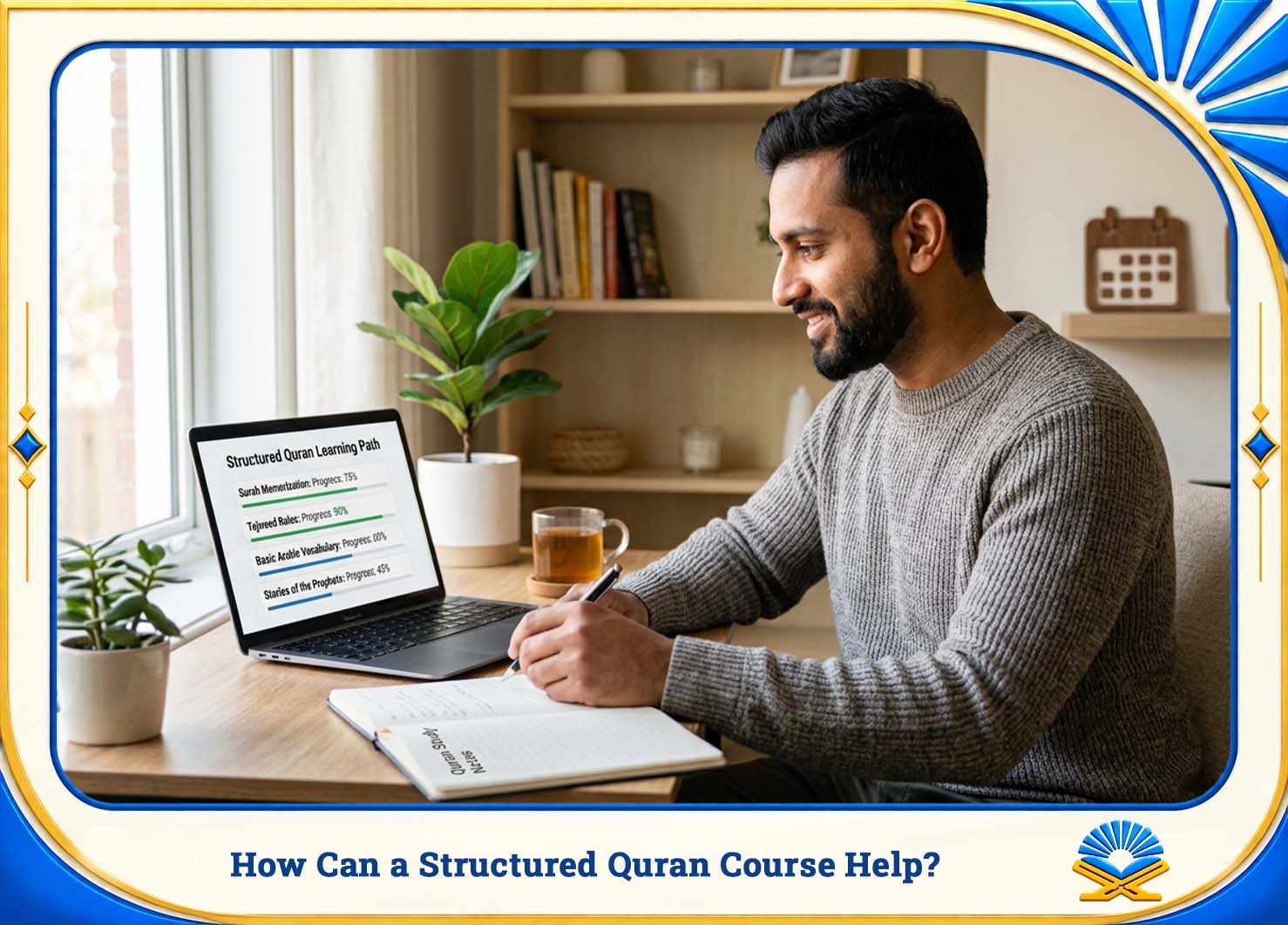
A structured Quran course gives the student a clear path instead of leaving them to decide what to study next.
This approach can help beginners who know they want to learn but remain unsure whether they should start with Arabic letters, Qaida, pronunciation, Tajweed, or memorization. Families looking for a suitable learning environment for younger students may also explore online quran classes for children when they want lessons that consider a child’s age and existing skills.
A guided course can organize these skills into a logical progression. The teacher can also identify weaknesses that the learner may not notice independently.
Structure does not mean every student should follow an identical pace. A clear sequence can work alongside enough flexibility to spend more time on difficult skills when necessary.
What If You Have Tried Learning Before?
Starting again does not always mean starting from zero. One learner may remember the Arabic alphabet but have forgotten how vowels work. Another may read slowly but have never studied Tajweed. Someone else may have memorized several short surahs but still make pronunciation mistakes.
In these situations, begin with the skills the learner still has. A teacher can identify what remains familiar and what needs rebuilding. This approach prevents unnecessary repetition while making sure important gaps do not remain.
For families supporting a child who is returning to Quran study, online quran learning for kids can provide a structured way to continue practicing according to the child’s needs.
Returning to Quran study after a long break can therefore begin with a fresh assessment rather than a focus on past difficulties.
What Questions Should You Ask Before Enrolling?
Before joining a program, ask questions that reveal how the actual learning process works. Useful questions include:
- Will you assess my current reading level?
- What will I study during my first lessons?
- How will the teacher correct pronunciation mistakes?
- How much practice should I complete between lessons?
- Can the teacher adjust the pace if I need more repetition?
- Does the program suit complete beginners?
- How will the teacher follow my progress?
- What will I study after completing the beginner level?
Clear answers to these questions can tell you more about a program’s suitability than broad marketing claims.
Starting With Hamel El-Quran Academy
For learners looking for structured Quran education, Hamel El-Quran Academy can serve as a starting point for discussing an appropriate learning path.
The first step involves identifying the student’s abilities and learning objective. A complete beginner may need foundational reading instruction, while another learner may already have basic reading skills and need help with pronunciation or Tajweed.
Before choosing a level, discuss what the student can currently read, which areas cause difficulty, and what they hope to achieve. This approach makes the next step more practical and helps avoid a program that feels either too advanced or unnecessarily basic.
If Hamel El-Quran Academy is the service you are considering, contact the academy about the appropriate starting level. This conversation can clarify which learning path fits your needs.
How to Build a Practical Beginner Study Routine?
A beginner does not necessarily need an extremely long daily study session. What matters most is creating a routine that the learner can maintain. A simple routine can combine:
- Lesson time: Use the live lesson for new instruction, correction, and questions.
- Short practice: Review the sounds, words, or rules introduced during the lesson.
- Reading aloud: Practice applying the skill rather than only looking at the material silently.
- Correction: Pay attention to mistakes identified by the teacher and repeat the difficult examples.
- Review: Revisit previous material before moving too far ahead.
This approach keeps learning manageable and gives the student repeated exposure to the same skills without making every practice session feel overwhelming.
When Is It Time to Move Beyond the Beginner Level?
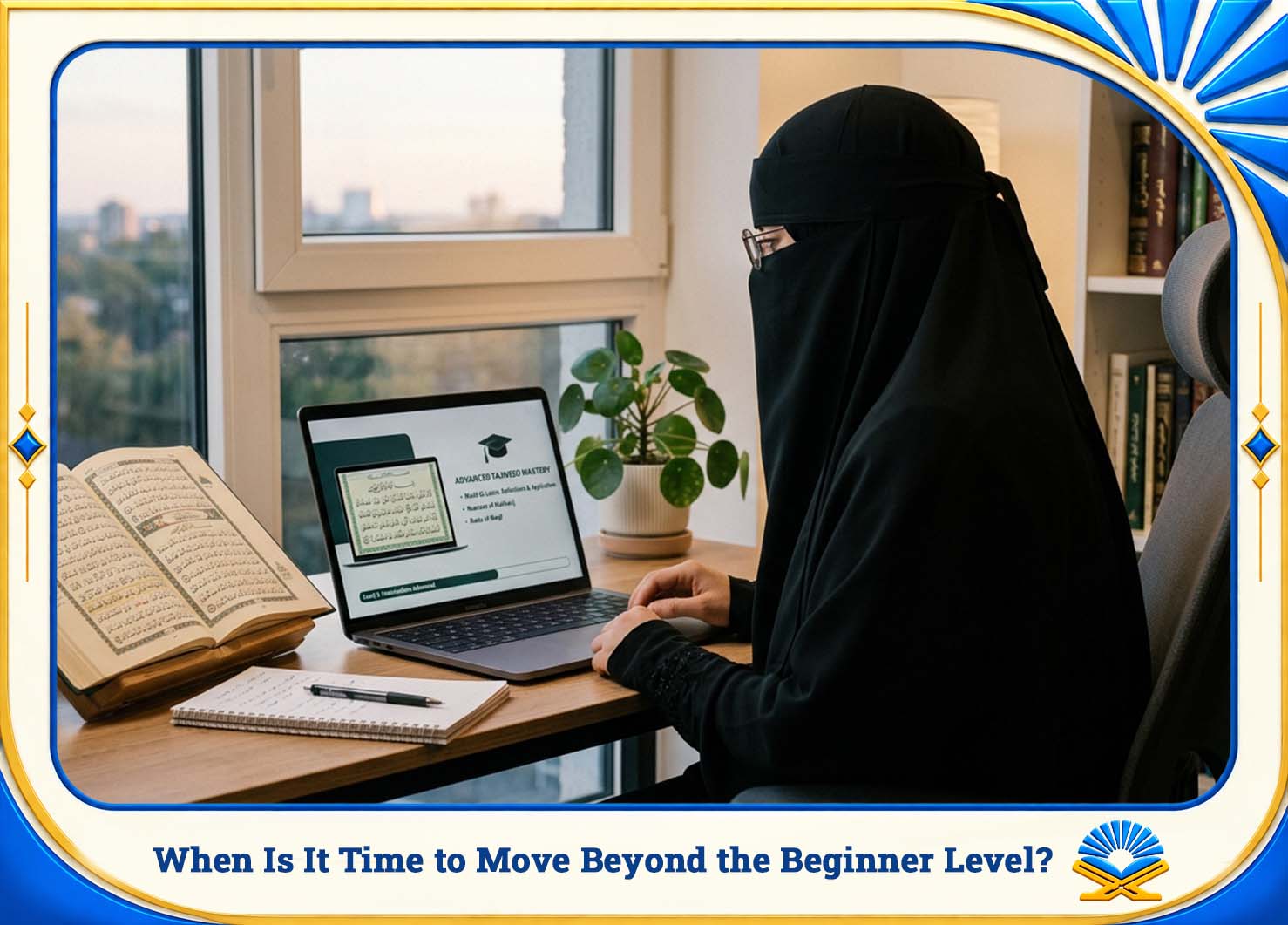
No universal number of weeks or lessons determines when someone is ready. A learner may be ready to progress when they can recognize common letters and reading patterns comfortably, read connected words with greater confidence, apply foundational pronunciation rules, and handle basic Tajweed with less assistance.
The teacher’s feedback also matters. A student may feel ready because the material looks familiar while still needing more practice with pronunciation.
Therefore, base progression on demonstrated ability rather than simply completing a certain amount of material.
Frequently Asked Questions About Online Quran Classes for Beginners
These common questions address starting Quran reading, choosing a suitable learning path, and making steady progress as a beginner.
Can someone learn Quran reading without knowing Arabic?
Yes. Quran reading and conversational Arabic are different skills. A beginner can first develop the ability to recognize letters, understand basic reading patterns, and recite Quranic text while studying Arabic more deeply according to their goals.
How long does it take to learn basic Quran reading?
The timeframe varies between learners. Previous exposure to Arabic, practice frequency, age, and pronunciation difficulties can all affect progress. A consistent routine is more useful than expecting a fixed result after a specific number of lessons.
Should children and adults follow the same beginner curriculum?
Not necessarily. Both may study the same fundamental reading skills, but the teacher can adjust the teaching method, explanation style, lesson activities, and pace to the learner’s age and needs.
Can I continue Quran study after completing the beginner level?
Yes. Once the basic reading foundation becomes secure, a learner can move toward stronger Tajweed, more fluent recitation, memorization, Quranic Arabic, or another area that matches their learning goals.
In conclusion, starting Quran study becomes easier when the learner has a clear path and receives correction at the right stage. Online Quran classes for beginners can provide that structure by taking students from basic letter recognition toward confident reading and foundational Tajweed.
The most important factors include the learner’s starting point, the teacher’s approach to correction, the pace of instruction, the practicality of the schedule, and the way the program assesses progress.
Whether you are an adult beginning from scratch or a parent helping a child start Quran reading, choose a learning path that allows skills to develop gradually.
If you are considering Hamel El-Quran Academy, discuss the student’s current level and learning goal with the academy. This step can help you identify an appropriate starting point and begin learning with a clear direction.